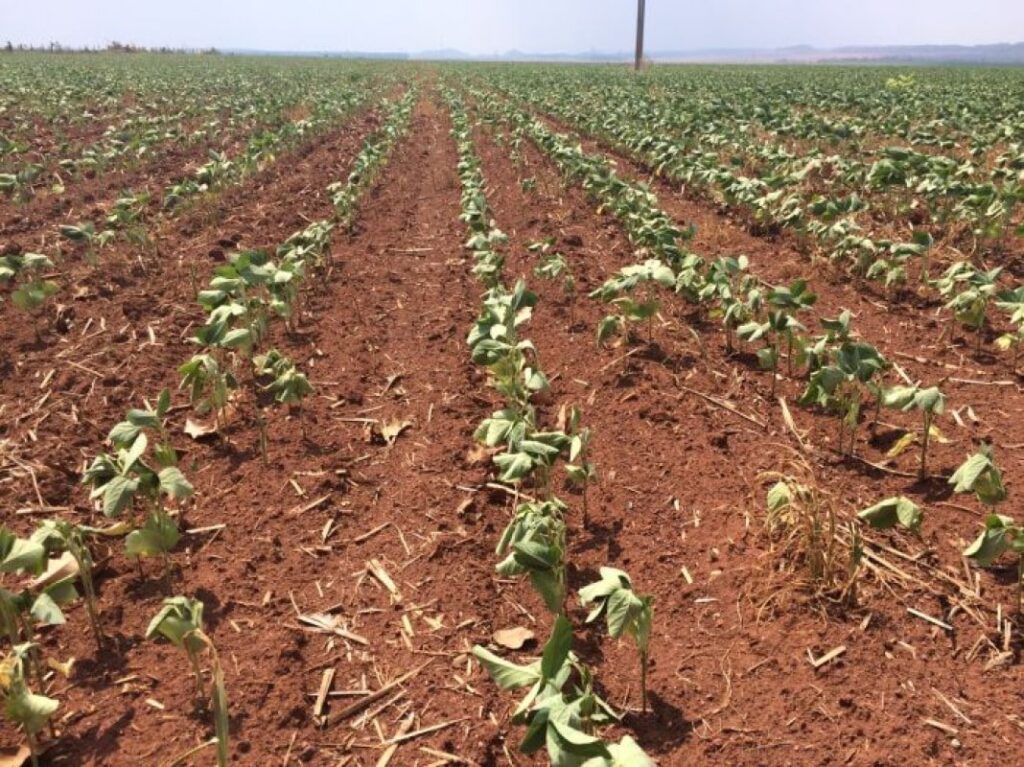
Soy (Glycine max) is, without a doubt, the most important crop in Brazilian agribusiness, being a fundamental pillar for the country's economy and global food security. Brazil stands out as one of the largest soybean producers and exporters in the world, with record harvests boosting the sector. However, the path to high productivity is fraught with challenges, and one of the most critical and often underestimated is floral and pod abortion. This phenomenon, which can significantly reduce the crop's productive potential, is influenced by several factors, including environmental stresses and, crucially, nutritional deficiencies. Foliar nutrition emerges as a strategic tool to mitigate this problem, offering a quick and efficient way to supply essential nutrients. Route Chemicals, with its line of innovative and scientifically validated products, presents precise solutions to optimize soybean flowering, ensuring greater pod set and, consequently, a more robust harvest.
Floral and pod abortion in soybean is a natural physiological process, but it can be intensified by adverse conditions, resulting in productivity losses ranging from 45% to 70% of the flowers produced [1, 2]. Among the causes, deficiency of micronutrients such as boron (B) and zinc (Zn) plays a crucial role. Boron, in particular, is vital for pollen grain germination, pollen tube growth, and seed and fruit formation. Its deficiency directly compromises fertilization and pod development, leading to abortion [3, 4]. Research data indicates that a lack of boron can reduce soybean productivity by up to 15 bags per hectare in soils with low availability of the nutrient [5].
Route Chemicals offers **Boron 10 Route Fertilizer**, a high-performance solution to meet this critical demand. With 10% w/v boron, its chelated formulation guarantees high foliar absorption and rapid translocation within the plant, optimizing nutrient availability at times of greatest demand. In addition to boron, the Route line includes specific adjuvants that, when combined, improve coverage, penetration and effectiveness of foliar application, minimizing losses and maximizing the absorption of micronutrients.
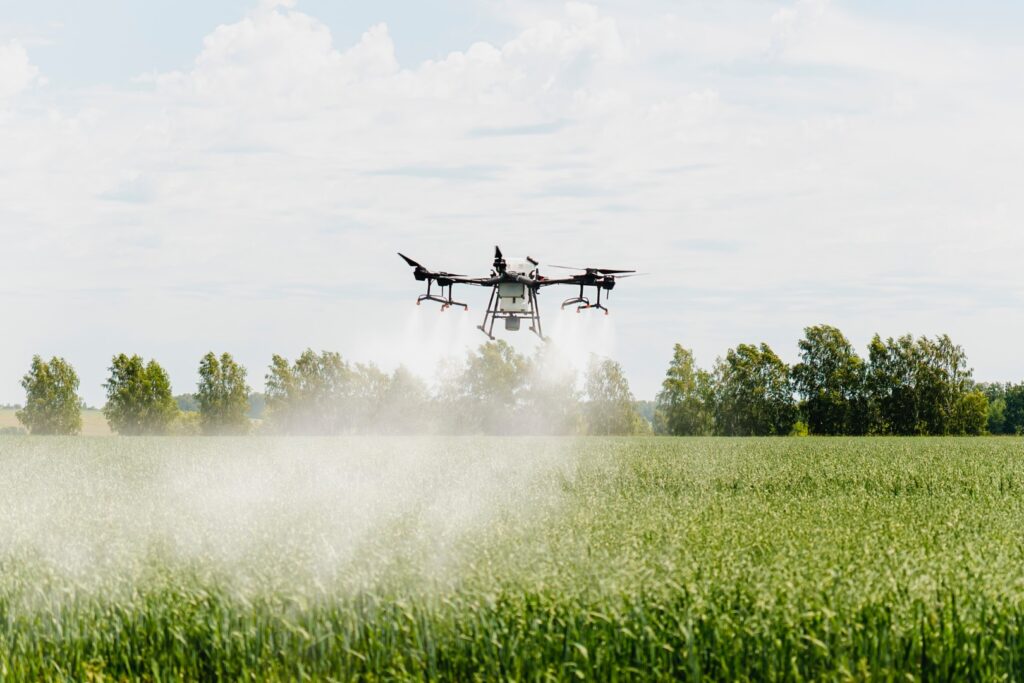
The application of Boron 10 Route Fertilizer is recommended at the beginning of flowering (stage R1-R2), the period of maximum demand for boron for the formation of reproductive structures. The suggested dosage varies from 0.5 to 1.0 L/ha, depending on soil and foliar analysis, as well as the history of the area and the productive potential of the cultivar. The application methodology should be via foliar spraying, preferably in the cooler hours of the day to optimize absorption. The use of Route adjuvants is essential to guarantee the uniformity of the mixture and the adhesion of the product to the leaves.
With the precise application of Boro 10 Route Fertilizer, the expected results are quantifiable and impactful. Studies demonstrate an average increase of 3 to 5 bags per hectare in areas with a history of boron deficiency, due to reduced floral abortion and greater pod set. Under ideal conditions, this increase can be even greater, resulting in a significant return on investment and more productive and profitable farming. Optimizing foliar boron nutrition not only increases yield, but also improves grain quality and overall plant health, preparing it for a more efficient grain filling cycle.
The credibility and effectiveness of Route Chemicals solutions are backed by a robust research and development program. More than 50 scientific studies were conducted in partnership with renowned federal universities and research institutions throughout Brazil. These studies, carried out in different soil and climate conditions, prove the efficiency of Boro 10 Route Fertilizer and other products in the line in reducing floral abortion and increasing soybean productivity. The practical results obtained in the field corroborate the research data, consistently demonstrating the increase in the number of pods per plant and grain weight. Comparisons with untreated areas or areas treated with lower technology products highlight the superiority of the Route approach, which translates into greater profitability for rural producers. This ongoing scientific validation ensures that Route Chemicals' recommendations are based on solid evidence and adapted to the realities of Brazilian agriculture.
Floral abortion in soybeans represents a significant barrier to achieving high yields. Foliar nutrition, especially with micronutrients such as boron, emerges as an indispensable strategy to mitigate this problem. Boro 10 Route Fertilizer, with its advanced formulation and proven effectiveness, offers rural producers the necessary tool to optimize flowering, ensure greater pod set and, consequently, maximize the productive potential of their crops. Don't let floral abortion limit your results. Invest in technology and science to harvest more and better. To learn more about how Route Chemicals solutions can transform your crops, visit our website at [https://routechemicals.com.br](https://routechemicals.com.br) or follow us on Instagram [@routeagrichemicals](https://www.instagram.com/routeagrichemicals). Get in touch with our technical team and discover the path to more productive and profitable soy.
References
[1] Seidel, E. P., & Basso, W. L. (2012). Foliar fertilization based on calcium and boron in soybean (Glycine max) cultivation. *Scientia Agraria Paranaensis*, 11(2), 101-106. Available at: [https://saber.unioeste.br/index.php/scientiaagraria/article/view/7303](https://saber.unioeste.br/index.php/scientiaagraria/article/view/7303)
[2] Stoller. (n.d.). *Abortion of flowers and pods in soybean cultivation: how to overcome it?* Available at: [https://www.stoller.com.br/blog/abortamento-de-vagens-na-soja/](https://www.stoller.com.br/blog/abortamento-de-vagens-na-soja/)
[3] Agricultural courses. (2024). *The Importance of Boron for Soybeans*. Available at: [https://agrocursos.com.br/a-importancia-do-boro-para-a-soja/](https://agrocursos.com.br/a-importancia-do-boro-para-a-soja/)
[4] Stoller. (n.d.). *Boron in Soy: Importance and Application Strategies*. Available at: [https://www.stoller.com.br/blog/boro-na-soja/](https://www.stoller.com.br/blog/boro-na-soja/)
[5] Plantimar. (2024). *What are the main causes of pod and flower abortion in soybean crops?* Available at: [https://www.plantimar.com.br/post/quais-s%C3%A3o-as-principais-causas-de-abortamento-de-vagens-e-flores-na-cultura-da-soja] (https://www.plantimar.com.br/post/quais-s%C3%A3o-as-principais-causas-de-abortamento-de-vagens-e-flores-na-cultura-da-soja)
[6] Santos, L. A. M., Melo, S. S., & Barbosa, R. T. (2025). Soybean productivity in response to foliar application of micronutrients. *Research, Society and Development*, 14(1), e32. Available at: [https://editorapantanal.com.br/journal/index.php/taes/article/view/32](https://editorapantanal.com.br/journal/index.php/taes/article/view/32)