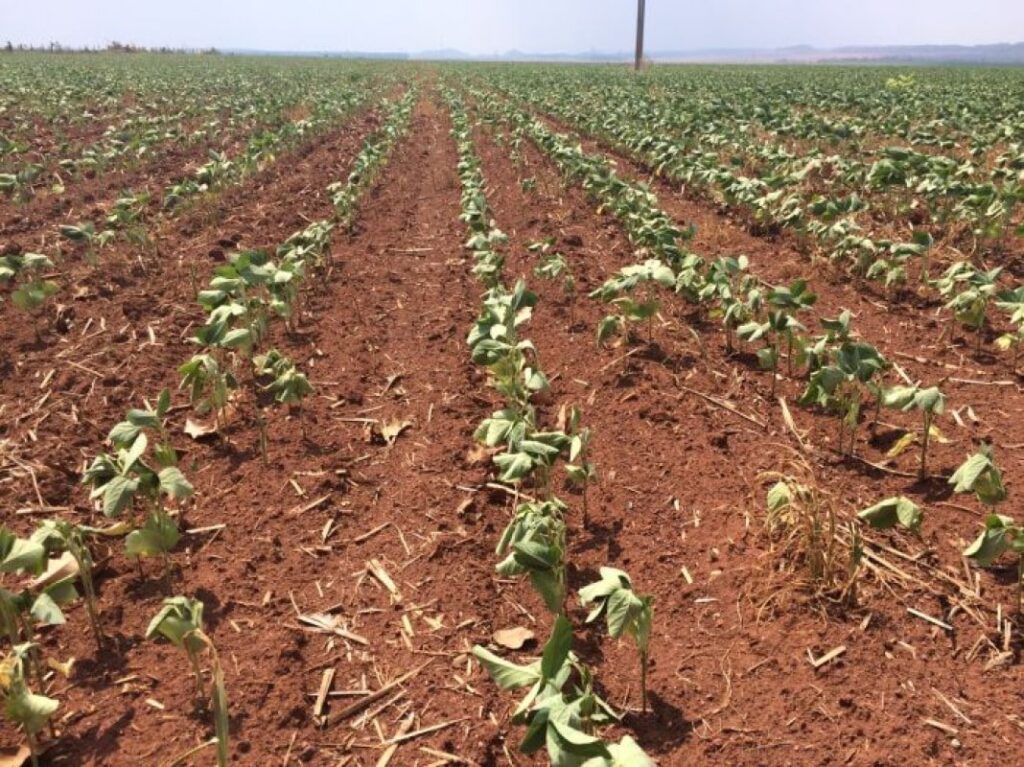
Harvesting soybeans causes physical, chemical and biological changes to the soil. In March, understanding these changes is fundamental to the success of off-season corn, which will be implemented in an environment already impacted by machines, cultural waste and chemical management.
Ignoring this diagnosis is one of the main reasons for failures in the establishment of the off-season.
Physical changes to the soil
Intense machine traffic during harvest can generate superficial and subsurface compaction, reducing porosity and hindering corn root growth.
Even light compactions, often invisible, are enough to limit the initial development of the crop.
Chemical and biological changes
Fertilizer and pesticide residues alter the chemical dynamics of the soil. Furthermore, microbial activity can be reduced after periods of stress, affecting nutrient cycling.
Soil biology plays a fundamental role in the availability of phosphorus, nitrogen and micronutrients.
Common mistakes in post-soybean management
- Lack of physical soil diagnosis.
- Immediate planting without evaluating the structure.
- Disregard the biological activity of the soil.
Biological products like Bio Pho e Bio Azoz they help reactivate soil microbiology, promoting greater efficiency in the availability of nutrients and a better root environment for off-season corn.
The soil after soybeans is not neutral. It bears marks from previous management and needs to be technically evaluated before corn is planted.
👉 Request a soil diagnosis with the Route team.
👉 Prepare the right environment for off-season corn.
References
BRAZILIAN AGRICULTURAL RESEARCH COMPANY. Physical and biological quality of soil in agricultural systems. Brasília: Embrapa, 2021.