Cassava (Manihot esculenta Crantz) plays a crucial role in Brazilian agribusiness, being a subsistence crop and an important source of income for thousands of producers. However, cassava productivity in Brazil still faces significant challenges, often related to nutritional deficiencies in the soil. Among the essential micronutrients, boron stands out for its importance in the development of tuberous roots, the crop's main commercial product. Boron deficiency can lead to considerable losses in root productivity and quality. Route Chemicals, aware of these challenges, offers a specific nutritional program, with emphasis on Route Boro 10 Fertilizer, an innovative solution to overcome low productivity and guarantee heavier, better quality roots.
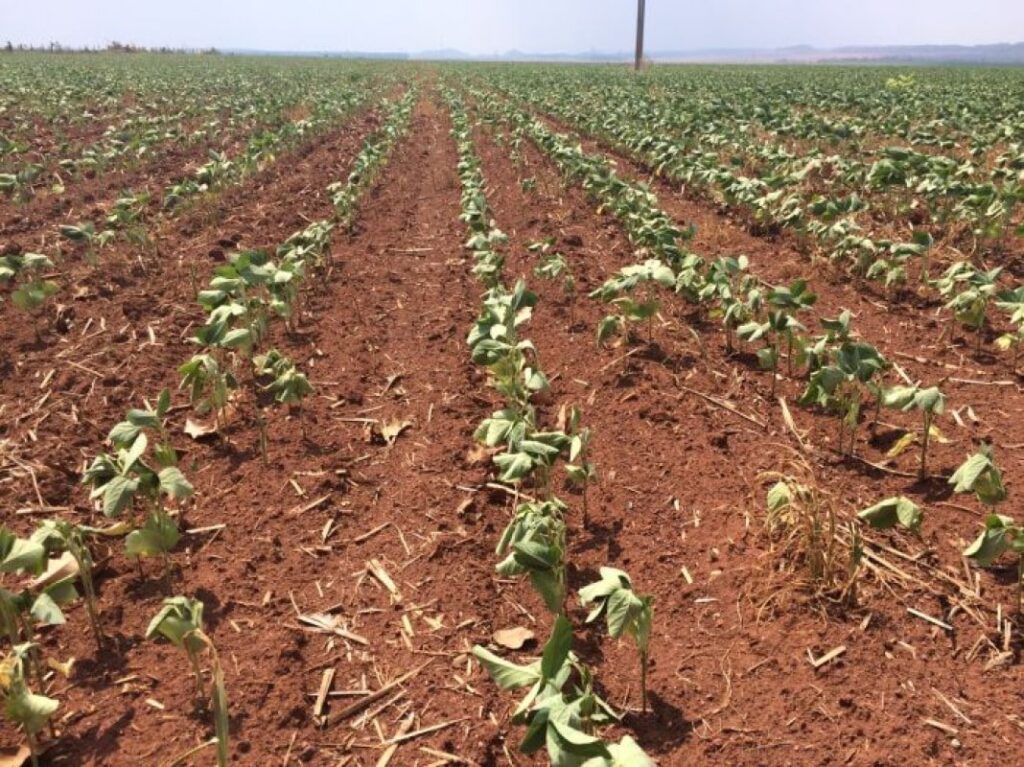
Boron deficiency in cassava is a common nutritional problem that directly affects the development of tuberous roots. Boron is an essential micronutrient for several plant physiological processes, including cell division, transport of sugars and carbohydrates from leaves to roots, cell wall formation, and pollination and fertilization [1, 2]. When there is a shortage of boron, the translocation of photoassimilates to the roots is compromised, resulting in smaller roots, with lower starch content and, consequently, lower productivity. Visual symptoms of boron deficiency include deformed, thickened and brittle young leaves, necrosis of the apical meristem and poor differentiation of vascular tissues [3].
In Brazil, the average productivity of cassava is still considered low in many regions, with the Northeast presenting an average yield of 9,828.53 kg/ha, while the national average is around 11,030 kg/ha [4, 5]. Nutritional deficiency, particularly boron, contributes significantly to this low productivity. Studies indicate that the absence of boron can reduce the assimilation of CO2, the irregular functioning of stomata and the decrease in photosynthetic rate, directly impacting the accumulation of biomass in the roots [6].
Route Chemicals offers **Route 10 Boron Fertilizer** as an effective solution to combat boron deficiency in cassava. This foliar fertilizer stands out for its chelated formulation, which guarantees high foliar absorption and rapid availability of the nutrient for the plant. Boron 10 Route contains 10% w/v boron, an ideal concentration to meet the crop's needs. Its technical differences include its action on the growth of floral tips and tissues, its importance for pollination and fertilization, and the reduction of flower and fruit abortion, crucial factors for flowering and the development of healthy and productive roots.
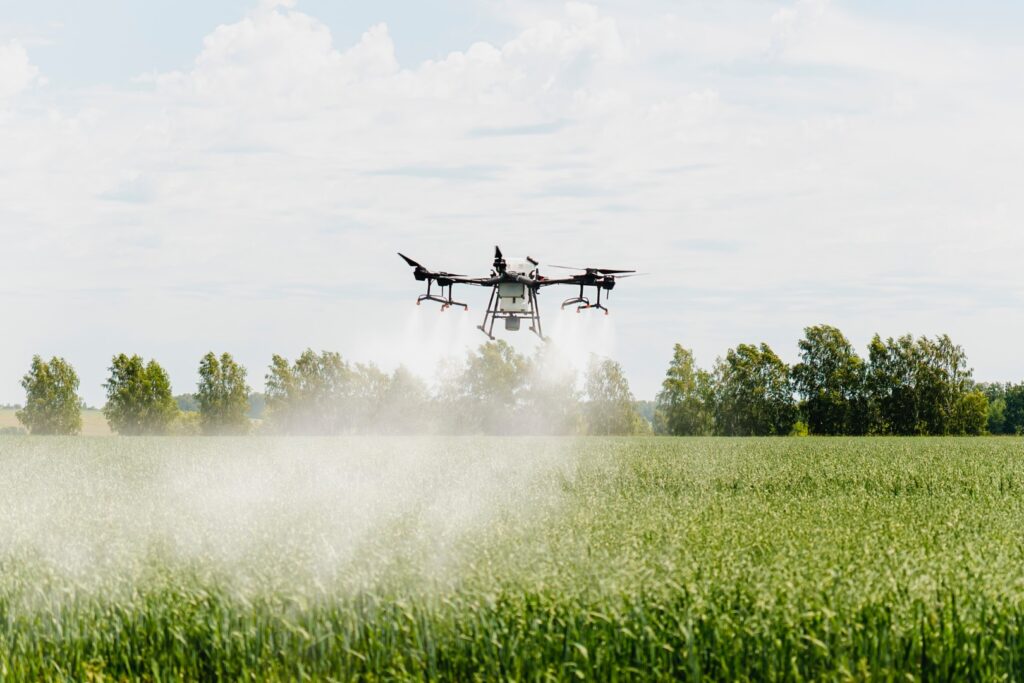
For cassava cultivation, the recommended dosage of Boro 10 Route Fertilizer is 0.5 to 1 L/ha, with foliar application. The ideal application time generally occurs between 35 and 60 days after planting, a period of greatest boron demand for tuber formation and growth [7]. It is recommended to use Route adjuvants to improve application efficiency, ensuring uniform coverage and maximizing nutrient absorption. The expected results with the application of Boro 10 Route Fertilizer include a significant increase in the productivity of tuberous roots, with greater weight and better quality, as well as an increase in the plant's resistance to stress and diseases. Producers who adopt the Route nutritional program can expect a productivity increase of up to 20-30% in areas with boron deficiency, in addition to more uniform roots and a higher dry matter content.
The effectiveness of Route Chemicals products, including Route Boron 10 Fertilizer, is backed by an extensive research and development program. The company continually invests in scientific validation, with more than 50 studies carried out in partnership with federal universities and renowned research institutions. These studies cover various crops and soil conditions, proving the efficiency and safety of Route products.
The practical results obtained in the field, on several rural properties, corroborate the scientific findings. Producers who implemented the Route nutritional program for cassava reported notable improvements in root quality, such as greater uniformity, lower disease incidence and higher starch content, in addition to increased productivity. Comparisons with untreated areas or areas treated with competing products demonstrate the superiority of Boro 10 Route Fertilizer in correcting boron deficiency and optimizing cassava development. Route Chemicals is proud to offer science-based, field-proven solutions, ensuring maximum return on investment for the farmer.
Foliar nutrition, especially with the micronutrient boron, is a determining factor for the success of cassava cultivation. Boron deficiency can severely limit the productive potential of tuberous roots, impacting the producer's profitability. Route Chemicals' Boro 10 Route Fertilizer appears as the ideal solution to optimize the development of cassava, ensuring heavier roots, better quality and, consequently, greater productivity.
Don’t let nutritional deficiency compromise your crops! Invest in the future of your cassava production with innovative solutions from Route Chemicals. To learn more about Route Boron 10 Fertilizer and other products, visit our website at [https://routechemicals.com.br](https://routechemicals.com.br) or follow us on Instagram [@routeagrichemicals](https://www.instagram.com/routeagrichemicals). Our consultants are ready to offer the technical support necessary for the success of your farming.
References
[1] AGROLINK. **Boron – everything you need to know about this fertilizer**. Available at: <https://www.agrolink.com.br/fertilizantes/nutrientes/boro_467225.html>. Accessed on: 7 Aug. 2025.
[2] EMBRAPA. **Effect of boron application in Tabuleiro Costeiro soil on passion fruit cultivation**. Available at: <https://www.alice.cnptia.embrapa.br/alice/bitstream/doc/875330/1/036JeffersonAnaLuciaok.pdf>. Accessed on: 7 Aug. 2025.
[3] U.S. BORAX. **How to identify boron deficiency**. Available at: <https://agricultura-brasil.borax.com/boron-us-borax/boron-deficiency/boron-deficiency-in-crops>. Accessed on: 7 Aug. 2025.
[4] EMBRAPA. **Cassava in numbers**. Available at: <https://www.embrapa.br/congresso-de-mandioca-2018/mandioca-em-numeros>. Accessed on: 7 Aug. 2025.
[5] AGRICULTURE PR. **Cassava – Prognosis**. Available at: <https://www.agricultura.pr.gov.br/sites/default/arquivos_restritos/files/documento/2022-01/Mandioca.pdf>. Accessed on: 7 Aug. 2025.
[6] REPOSITORIO.UFPB.BR. **Cassava productivity in response to spacing and fertilization**. Available at: <https://repositorio.ufpb.br/jspui/bitstream/123456789/14384/1/RMC23052019.pdf>. Accessed on: 7 Aug. 2025. [7] AGROLINK. **Boron – everything you need to know about this fertilizer**. Available at: <https://www.agrolink.com.br/fertilizantes/nutrientes/boro_467225.html>. Accessed on: 7 Aug. 2025.