Micronutrients in Corn: Unlocking the Productive Potential in Cerrado Soils with the Route Chemicals Solution
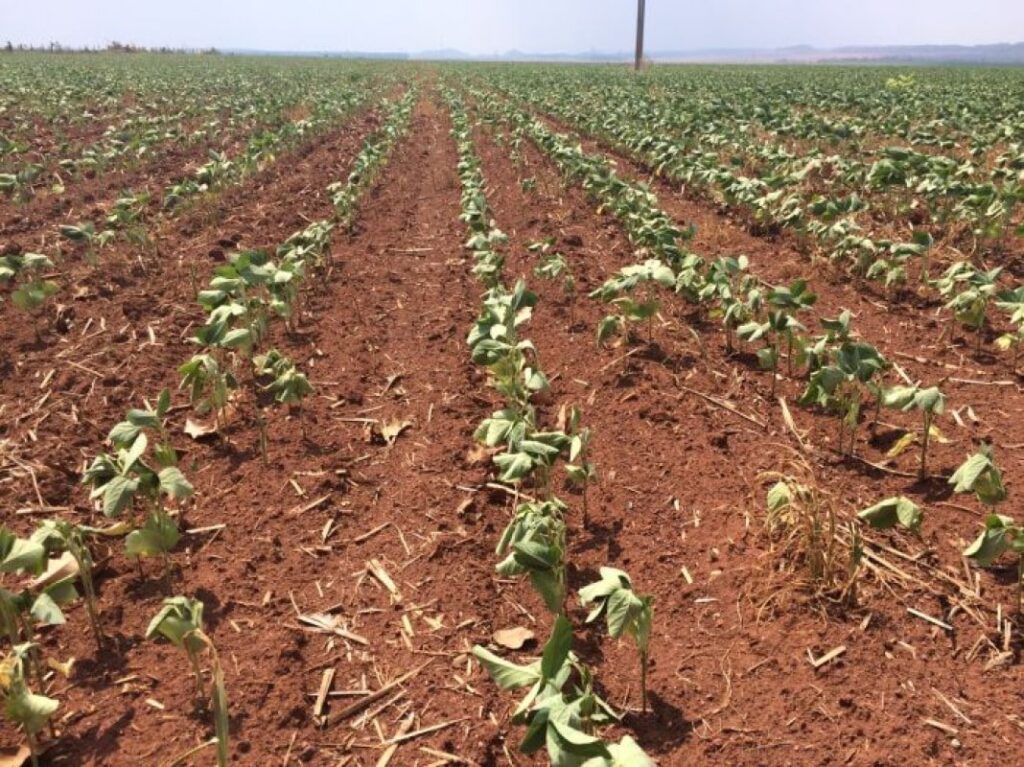
Corn (Zea mays L.) is one of the most important crops for Brazilian agribusiness, with a fundamental role in the economy and in the production of food and animal feed. Brazil stands out as one of the largest corn producers and exporters in the world, driven mainly by the expansion of the cultivated area in the Cerrado. However, the soils in this region, characterized by their acidity and low natural fertility, present significant challenges for the nutritional management of the crop.
Deficiency of micronutrients, such as boron (B) and zinc (Zn), is a common limiting factor that severely compromises the productive potential of corn in the Cerrado. These nutritional deficiencies can result in significant losses in grain yield and quality, directly impacting producers' profitability. Given this scenario, the search for effective solutions to optimize corn nutrition is crucial to guarantee the sustainability and competitiveness of Brazilian agricultural production. Route Chemicals, with its expertise in plant nutrition and focus on research and development, presents a complete micronutrient program specifically formulated to overcome multiple deficiencies in tropical soils. With high-tech products and scientific validation, Route offers an innovative approach to promoting more vigorous plants and maximizing corn productivity in the Cerrado.
The soils of the Brazilian Cerrado are predominantly acidic, with low cation exchange capacity (CEC) and naturally reduced levels of organic matter and micronutrients. This soil condition, combined with intensive management and the high nutritional demand of corn, favors the emergence of micronutrient deficiencies, even in areas with a history of fertilization. Among micronutrients, boron (B) and zinc (Zn) are often the most limiting to corn productivity in this region [1, 2].
Boron plays crucial roles in plant development, actively participating in cell wall formation, sugar transport, carbohydrate metabolism, pollen germination and pollen tube growth. Boron deficiency in corn can lead to symptoms such as shortening of the internodes, poor ear formation, pollination failure and incomplete graining, resulting in significant productivity losses. Studies indicate that B deficiency can reduce corn productivity by up to 30% in soils with low levels of this nutrient [3].
Zinc, in turn, is essential for the synthesis of tryptophan, a precursor of the hormone auxin, fundamental for plant growth and development. Furthermore, it acts as an enzymatic cofactor in several metabolic reactions, including photosynthesis and protein metabolism. Zinc deficiency in corn manifests itself through interveinal chlorosis in young leaves, shortening of the internodes and reduction in plant size, directly impacting the formation and filling of grains. In Cerrado soils, Zn deficiency can cause productivity losses ranging from 15% to 40%, depending on the severity of the deficiency and growing conditions [4, 5].
The low availability of these micronutrients in Cerrado soils is aggravated by factors such as high pH (after excessive liming), high phosphorus levels (which can antagonize zinc absorption) and low organic matter. Conventional fertilizer, focused on macronutrients, often does not meet the demand for micronutrients, making foliar application an efficient strategy to correct these deficiencies quickly and accurately.
To overcome the productivity limitations imposed by micronutrient deficiencies in corn grown in Cerrado soils, Route Chemicals developed a complete and innovative program, focused on maximum efficiency of absorption and use by plants. The basis of this program is **Boron 10 Route Fertilizer**, a high-performance product with advanced technology.
Boro 10 Route Fertilizer is a chelated formulation with 10% w/v of boron, ensuring high foliar absorption and rapid translocation within the plant. Chelatization protects the nutrient from undesirable reactions in the spray tank and on the leaf surface, optimizing its availability. In addition to boron, the Route program includes complementary solutions for the supply of zinc and other essential micronutrients, formulated to act synergistically and correct multiple deficiencies.
The application of Route products is carried out foliarly, which allows a quick response from the plant and the correction of deficiencies at critical moments in the corn cycle. Dosages are specific to the crop and must be adjusted according to soil and foliar analysis, the phenological stage of the crop and the level of deficiency. It is recommended to apply Boro 10 Route Fertilizer in doses ranging from 0.5 to 1.5 L/ha, preferably in the early stages of corn development (V4-V8) and pre-flowering, to ensure adequate formation of reproductive structures and grain filling. For zinc, dosages can vary from 0.5 to 1.0 L/ha, focusing on the initial stages of growth. To maximize the efficiency of applications, Route Chemicals recommends the use of its **Route Adjuvants**. These adjuvants are formulated to improve the spreadability, adhesion and penetration of the spray solution, reducing losses due to drift and optimizing the absorption of micronutrients by the leaves. The application methodology must follow good agricultural practices, using calibrated spraying equipment and adequate spray volume to ensure uniform coverage of the foliage.
The implementation of the complete Route micronutrient program results in more vigorous corn plants, with greater root and leaf development, better health and, consequently, greater productive potential. An average increase in grain productivity of 5 to 15 bags/hectare is expected in areas with boron and zinc deficiency, depending on the severity of the deficiency and the general management of the crop. In addition to the quantitative increase, there is an improvement in the quality of the grains, with greater specific weight and nutrient content, adding value to production. These results reflect the correction of nutritional deficiencies, which allows the plant to express its full genetic potential.
The effectiveness of Route Chemicals' micronutrient program is backed by a solid scientific foundation and field-proven practical results. The company continually invests in research and development, carrying out more than 50 studies in partnership with federal universities and renowned research institutions throughout Brazil. This research, conducted in different soil and climate conditions, validates the performance and superiority of Route products in correcting deficiencies and increasing corn productivity.
The results of these studies consistently demonstrate the ability of Route products to optimize the absorption of micronutrients, promote healthy plant development and, consequently, increase crop yields. Comparisons with untreated areas or with the use of competing products highlight the competitive advantage of the Route solution, which translates into a greater return on investment for the producer. For example, in trials carried out in the Cerrado, the application of Boro 10 Route Fertilizer, together with the zinc program, resulted in average productivity increases that exceeded control areas by 8% to 12%, in addition to significant improvements in grain quality. This data reinforces Route Chemicals' commitment to innovation and delivery of solutions that generate real value for agribusiness.
Overcoming corn productivity limitations in Cerrado soils, especially those caused by deficiencies in micronutrients such as boron and zinc, is a challenge that requires technical and innovative solutions. Route Chemicals' complete micronutrient program offers an effective response to this demand, providing more vigorous plants, greater production potential and profitability for the farmer. With high-technology products, robust scientific validation and a commitment to excellence, Route positions itself as a strategic partner for the success of your farming. Don't let nutritional deficiencies limit your corn production potential. Invest in technology and innovation with Route Chemicals and reap the rewards of more productive and profitable farming. To learn more about our products, customized solutions and how we can help maximize your productivity, visit our website at [https://routechemicals.com.br](https://routechemicals.com.br) or follow us on Instagram [@routeagrichemicals](https://www.instagram.com/routeagrichemicals). Contact our technical team and discover the ideal program for your needs.
References
[1] FAGERIA, N. K. Adequate and toxic levels of zinc in the production of rice, beans, corn, soybeans and wheat in cerrado soil. **Brazilian Journal of Agricultural and Environmental Engineering**, v. 4, no. 1, p. 1-6, 2000. Available at: [https://www.scielo.br/j/rbeaa/a/CjnXzgSYGkWSYxSh7LrVXPh/](https://www.scielo.br/j/rbeaa/a/CjnXzgSYGkWSYxSh7LrVXPh/). Accessed on: 7 Aug. 2025.
[2] DIAS, F. C. Application of borate sources in the soil in soybean and corn crops in the Brazilian Cerrado in different soil textural classes. **UFMT Institutional Repository**, 2024. Available at: [https://ri.ufmt.br/handle/1/7046](https://ri.ufmt.br/handle/1/7046). Accessed on: 7 Aug. 2025.
[3] TOMICIOLI, R. M.; LEAL, F. T. Productivity limitation due to boron deficiency in soybean, corn, beans and coffee crops. **South American Sciences**, v. 2, no. 1, p. 1-10, 2021. Available at: [https://southamericansciences.com.br/index.php/sas/article/view/100](https://southamericansciences.com.br/index.php/sas/article/view/100). Accessed on: 7 Aug. 2025.
[4] AGROLINK. Zinc deficiency compromises corn development. **Agrolink**, 29 April. 2025. Available at: [https://www.agrolink.com.br/noticias/deficiencia-de-zinco-compromete-desenvolvimento-do-milho_501525.html](https://www.agrolink.com.br/noticias/deficiencia-de-zinco-compromete-desenvolvimento-do-milho_501525.html). Accessed on: 7 Aug. 2025.
[5] EMBRAPA. Corn Productivity Influenced by Zinc in a Red-Yellow Oxisol. **Infoteca-e Embrapa**, [n.d.]. Available at: [https://www.infoteca.cnptia.embrapa.br/infoteca/bitstream/doc/1084900/1/BP130.pdf](https://www.infoteca.cnptia.embrapa.br/infoteca/bitstream/doc/1084900/1/BP130.pdf). Accessed on: 7 Aug. 2025.
[6] AGRORECEITA. Corn fertilization: 10 tips to optimize management. **AgroReceita**, 30 April. 2025. Available at: [https://agroreceita.com.br/adubacao-do-milho/](https://agroreceita.com.br/adubacao-do-milho/). Accessed on: 7 Aug. 2025.