Cotton, one of the most emblematic crops in Brazilian agribusiness, plays a crucial role in the country's economy, generating jobs and foreign exchange. However, the search for maximum productivity and profitability faces complex challenges, especially when it comes to plant nutrition. One of the most significant bottlenecks is the low harvest of apples, which can severely compromise the production potential of the crop. This phenomenon, often underestimated, is intrinsically linked to nutritional imbalances, particularly during the critical phases of flowering and fruiting. Deficiency of essential micronutrients can lead to the abortion of reproductive structures, resulting in significant losses. Faced with this scenario, Route Chemicals presents an innovative and scientifically proven solution: strategic nutrition with high-performance micronutrients, focused on maximizing apple set and boosting cotton productivity.
The setting of apples in cotton is a complex physiological process, highly dependent on an adequate nutritional balance, especially during flowering and fruiting. Deficiency of micronutrients, in particular boron (B), is one of the main limiting factors that lead to the abortion of flowers and young fruits [1]. Boron performs vital functions in the plant, such as cell wall formation, sugar transport, pollen grain germination and pollen tube growth [2]. The absence or insufficiency of this micronutrient directly compromises the fertilization and initial development of apples, resulting in significant productivity losses.
Research data demonstrates the alarming impact of boron deficiency. Studies indicate that a lack of boron can reduce cotton productivity by up to 18% [3]. In some regions, boron application resulted in average increments of 150 kg/ha of seed cotton [4]. Boron deficiency is so critical that it can lead to the loss of reproductive structures, poor apple formation and reduced fiber quality [5].
Route Chemicals, aware of these challenges, developed **Boron 10 Route Fertilizer**, an innovative solution to optimize cotton plant nutrition. This product stands out for its chelated formulation, which guarantees high foliar absorption and maximum efficiency in delivering the nutrient to the plant. Chelated boron is less susceptible to fixation in the soil and has greater mobility within the plant, ensuring that the micronutrient is available at times of greatest demand, such as flowering and fruiting.
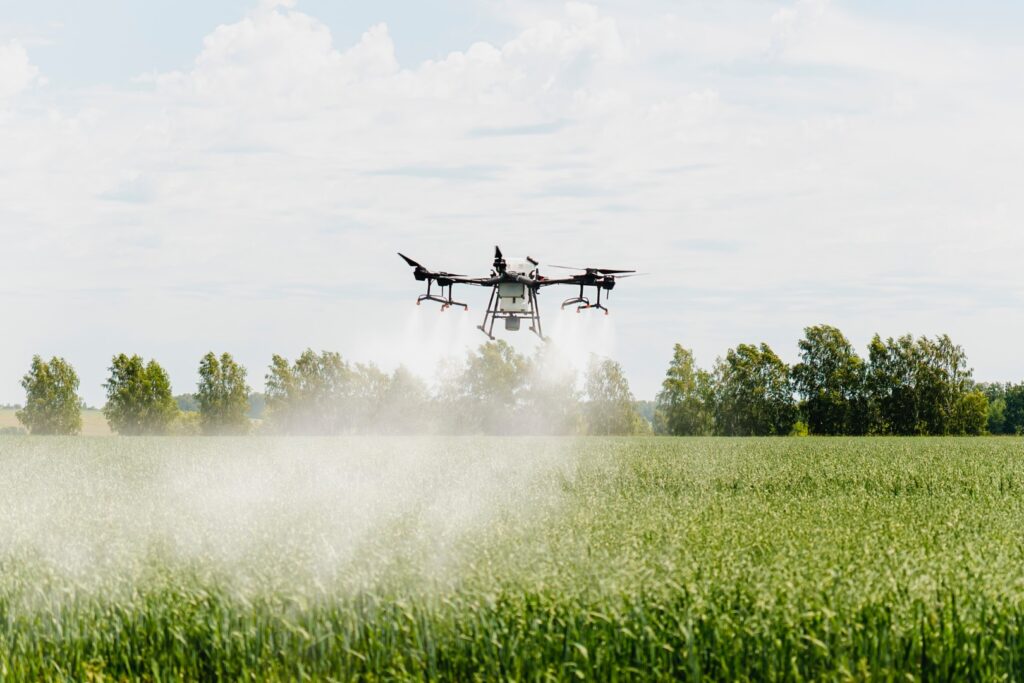
The application of Boro 10 Route Fertilizer is recommended via foliar application, taking advantage of the high absorption provided by the chelated formulation. For cotton, dosages can vary from 2.5 to 3.0 L/ha, divided into 3 strategic applications: 30, 40 and 50 days after crop emergence, coinciding with the pre-flowering and full flowering phases [6]. The use of Route adjuvants is essential to improve spraying efficiency, ensuring uniform coverage and optimizing nutrient absorption.
With the application of Boro 10 Route Fertilizer, producers can expect a significant increase in apple set, resulting in a greater number of apples per plant and, consequently, an increase in productivity. Furthermore, adequate nutrition with boron contributes to improving fiber quality, resulting in greater market value for the final product. Field studies and the experience of producers who adopted the Route solution demonstrate productivity gains that can exceed regional averages, consolidating cotton farming as an even more profitable enterprise.
The credibility and effectiveness of Route Chemicals solutions are backed by an extensive research and development program. With more than 50 studies conducted in partnership with federal universities and renowned research institutions, Route Chemicals proves the performance of its products in different crops and soil and climate conditions. These studies, which include field trials and rigorous laboratory analyses, consistently demonstrate the positive impact of Boro 10 Route Fertilizer on increasing apple set and cotton productivity.
The practical results obtained in commercial crops, in different regions of Brazil, corroborate the scientific findings. Producers who implemented nutritional management with Boro 10 Route Fertilizer report more vigorous crops, with a lower rate of abortion of reproductive structures and a greater number of apples per plant. Comparison with untreated areas or conventional management highlights the superiority of the Route approach, which translates into greater profitability for the cotton farmer. Route Chemicals continually invests in science to offer solutions that really make a difference in the field, ensuring the safety and effectiveness that Brazilian agribusiness demands.
Adequate nutritional management, focusing on essential micronutrients such as boron, is a determining factor for the success of cotton cultivation. Boro 10 Route Fertilizer appears as an indispensable tool to overcome the challenge of low apple set, ensuring more productive and profitable crops. Invest in the science and technology that Route Chemicals offers and transform the potential of your crop into concrete results.
To learn more about Route Boron 10 Fertilizer and other innovative solutions for your cultivation, visit our website at [https://routechemicals.com.br](https://routechemicals.com.br) and follow us on Instagram [@routeagrichemicals](https://www.instagram.com/routeagrichemicals). Our experts are ready to offer the technical support you need to maximize your productivity.
References
[1] Verde.ag. How important is boron in cotton? Available at: [https://blog.verde.ag/pt/nutricao-de-plantas/importancia-boro-no-algodao/](https://blog.verde.ag/pt/nutricao-de-plantas/importancia-boro-no-algodao/). Accessed on: 07 Aug. 2025.
[2] Verde.ag. Know the symptoms of boron deficiency in cotton. Available at: [https://blog.verde.ag/pt/nutricao-de-plantas/deficiencia-de-boro-no-algodao/](https://blog.verde.ag/pt/nutricao-de-plantas/deficiencia-de-boro-no-algodao/). Accessed on: 07 Aug. 2025.
[3] UNESP. Cotton productivity and boron dynamics may be affected. Available at: [https://repositorio.unesp.br/items/f1ebb33f-6111-4148-9757-e29ae787aa34](https://repositorio.unesp.br/items/f1ebb33f-6111-4148-9757-e29ae787aa34). Accessed on: 07 Aug. 2025.
[4] Agrolink. Boron makes a difference in cotton. Available at: [https://www.agrolink.com.br/noticias/boro-faz-a-diferenca-em-algodao_439152.html](https://www.agrolink.com.br/noticias/boro-faz-a-diferenca-em-algodao_439152.html). Accessed on: 07 Aug. 2025.
[5] Borax. Boron deficiency in cotton. Available at: [https://agricultura-brasil.borax.com/crop-guides/fiber-crops/cotton](https://agricultura-brasil.borax.com/crop-guides/fiber-crops/cotton). Accessed on: 07 Aug. 2025.
[6] Forplant. Boron 10 – Foliar Fertilizer. Available at: [https://www.forplant.com.br/boro-10-fertilizante-foliar-nutrientes-essíveis-para-o-desenvolvimento-da-planta](https://www.forplant.com.br/boro-10-fertilizante-foliar-nutrientes-essênios-para-o-desenvolvimento-da-planta). Accessed on: 07 Aug. 2025.