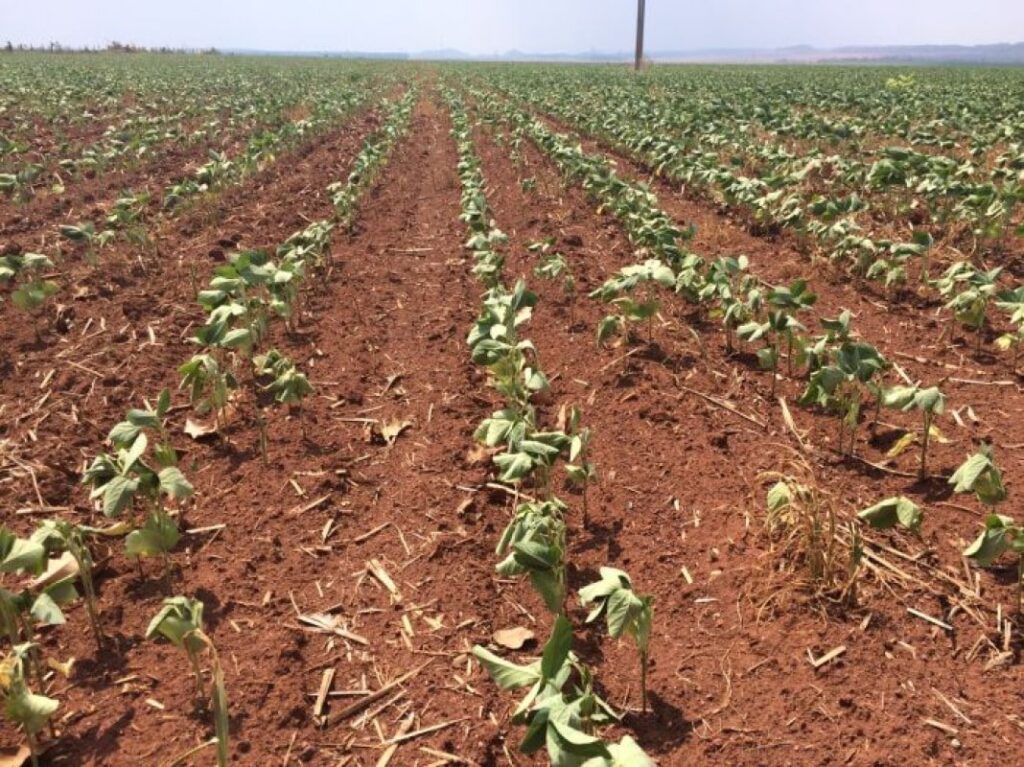
During the month of February, most soybean crops in Brazil are in the final stages of grain filling. Although the productive potential is already largely defined, it is precisely during this period that one of the main components of crop yield is consolidated: the final weight of the grains.
The idea that, after pod formation, little can be done to influence the final result is still common in the field. From a physiological point of view, this perception does not hold. Grain filling is a process highly dependent on the plant's metabolic balance and the efficiency of management adopted until the end of the cycle.
Grain filling physiology
Grain filling occurs from the translocation of photoassimilates produced in the leaves to the forming seeds. This process directly depends on photosynthetic activity, the integrity of the vascular system and the nutritional status of the plant.
Any factor that reduces active leaf area, such as nutritional stress, disease or phytotoxicity, compromises the filling rate and results in lighter grains. Even small reductions in this process can represent significant losses when multiplied per hectare.
Common stresses at this stage
At the end of the cycle, soybeans often face thermal, water and health stress. Furthermore, poorly executed applications can cause phytotoxicity, reducing the physiological efficiency of the plant at the time when it most needs to convert energy into grain weight.
Another relevant factor is the unevenness within the crop. Plants that have suffered stress throughout the cycle have a lower filling capacity, creating variability in grain size.
Economic impact of poorly managed filling
Lighter grains directly reduce final productivity. In a scenario of increasingly tight margins, seemingly small losses in the weight of a thousand grains can represent several fewer bags per hectare, significantly impacting the economic result of the harvest.
Connection with Route management and solutions
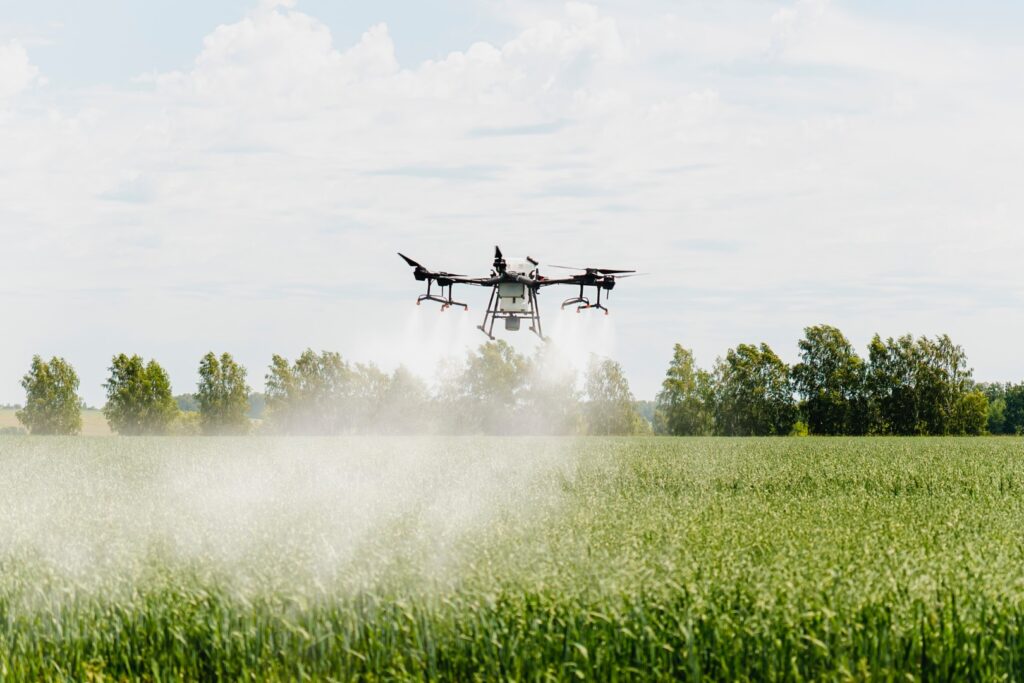
The maintenance of the plant's physiological activity until the end of the cycle depends on the efficiency of the applications carried out. The use of adjuvants such as Route-N e Route-VIP improves product deposition and absorption, reducing unnecessary stress and contributing to more efficient and uniform grain filling.
The weight of the bag is not only defined at the beginning of the cycle. Grain filling is a decisive phase and requires technical management until the last stages of the crop.
👉 Talk to a Route technical consultant and evaluate how your management influences grain filling.
👉 Protect the ultimate weight of your productivity.
References
BRAZILIAN AGRICULTURAL RESEARCH COMPANY. Physiology of soybean production. Londrina: Embrapa Soja, 2022.
TAIZ, L.; ZEIGER, E.; MØLLER, I. M.; MURPHY, A. Plant physiology. 6. ed. Porto Alegre: Artmed, 2017.