Soybeans (Glycine max) are, without a doubt, the most strategic crop in Brazilian agribusiness, boosting the economy and ensuring global food security. Brazil stands out as one of the largest soybean producers and exporters in the world, with record harvests that consolidate its leadership position. However, for this productivity to be maintained and, ideally, increased, it is crucial that rural producers are aware of nutritional challenges that can limit the productive potential of the crop. Among the essential micronutrients, boron emerges as an extremely important element, often underestimated, but fundamental for key physiological processes in soybeans. Boron deficiency can severely compromise flowering and, consequently, grain filling, directly impacting final productivity. Route Chemicals, aware of this nutritional gap, presents Route Boro 10 Fertilizer, an innovative and high-performance solution, developed to optimize soybean nutrition and maximize the yield of Brazilian crops. This technical article will explore the relevance of boron for soybeans, the impacts of its deficiency and how Boron 10 Route Fertilizer positions itself as the key to overcoming these challenges, ensuring a significant increase in productivity.
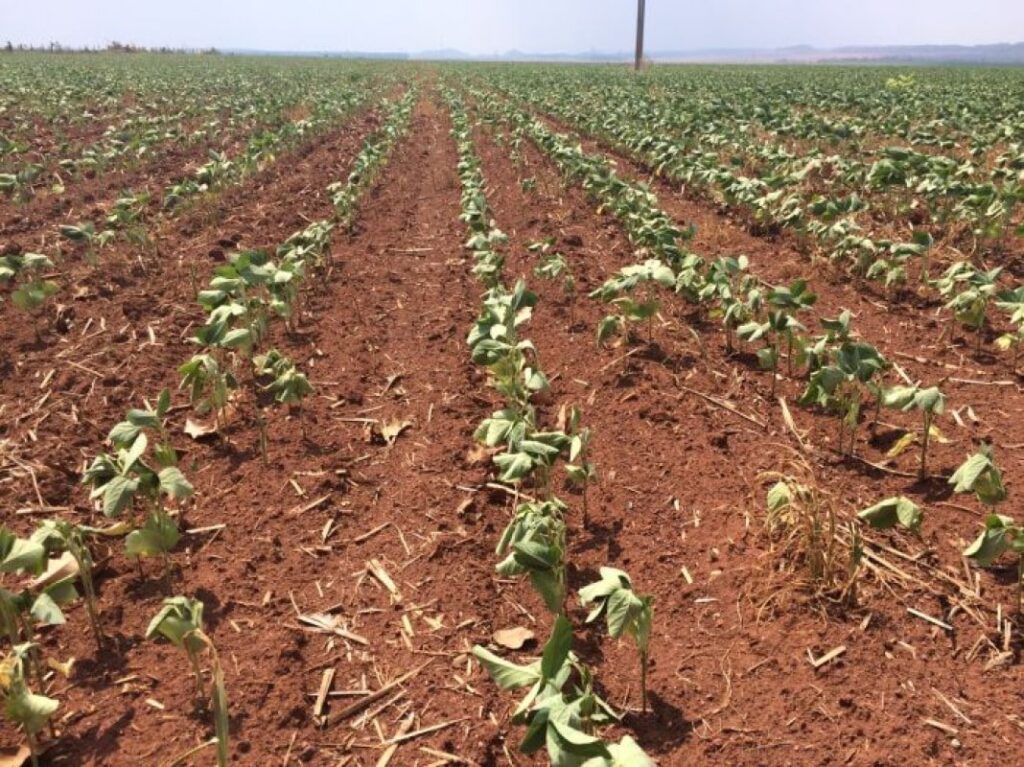
Boron (B) is an essential micronutrient for plant development, playing crucial roles in several stages of the soybean cycle. Its importance lies mainly in its participation in the formation of the cell wall, in the transport of sugars, in the germination of the pollen grain and in the development of the pollen tube [1, 2]. Boron deficiency in soybeans can manifest itself in several ways, negatively impacting growth and productivity. Visible symptoms include thickening and wrinkling of leaves, interveinal chlorosis, and downward curling of leaf tips [3]. In more severe cases, partial or total inhibition of the growth of apical buds may occur, resulting in plants with smaller size and branching [4].
The impact of boron deficiency on soybean productivity is substantial, especially in the reproductive stages. Boron is vital for pollen viability and pollen tube development, processes that are directly responsible for the fertilization of flowers and, consequently, the formation of pods and grain filling [5]. The lack of this micronutrient can lead to a lower flower setting rate, pod abortion and malformed or shriveled grains, resulting in significant losses in productivity. Studies indicate that adequate boron supplementation can generate productivity increases, with some studies pointing to gains of up to 15% in soybean crops [6].
Route Chemicals offers **Route 10 Boron Fertilizer** as the ideal solution to meet soybean boron needs. This product stands out for its formulation with 10% w/v boron, featuring a chelated formulation that guarantees high foliar absorption. Boron chelation improves its stability and availability to the plant, minimizing losses and maximizing application efficiency [7]. Furthermore, high foliar absorption allows the nutrient to be quickly translocated to the plant's demand points, such as flowers and developing grains.
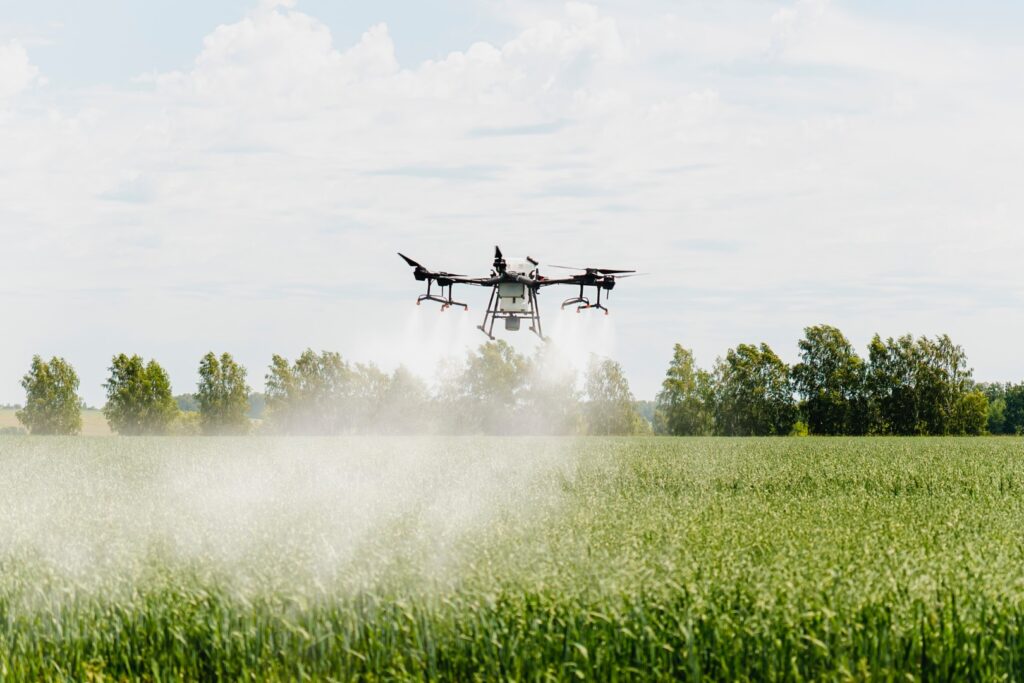
For soybean crops, the application of Boro 10 Route Fertilizer is recommended in the initial reproductive phases, specifically in **R1-R2 (beginning of flowering)**. The suggested dosage is **0.5 to 1 L/ha**, depending on the level of deficiency and soil and foliar analysis. Foliar application at this phenological stage is strategic, as boron is a nutrient with low mobility in the phloem, and its direct application to the leaves ensures that it is available at the time of greatest demand for reproductive processes. The application methodology must be via foliar spraying, preferably with the use of Route adjuvants, which optimize coverage and penetration of the product into the leaf, further increasing absorption efficiency. The expected results with the application of Boro 10 Route Fertilizer are more uniform and abundant flowering, greater flower set, reduced pod abortion and, consequently, better grain filling. This translates into a quantifiable increase in soybean productivity, with the expectation of an increase of up to 15% in crop yield, as observed in various research and field validations. This productivity gain represents a significant return on investment for the rural producer, consolidating the importance of boron nutrition for maximizing the productive potential of soybeans.
The effectiveness of Route Boron 10 Fertilizer and the importance of boron in soybean cultivation are supported by an extensive research and development program at Route Chemicals. The company continually invests in scientific validation, carrying out **more than 50 studies** in partnership with renowned federal universities and research institutions throughout Brazil. These studies cover several soybean-producing regions, different soil types and varied climatic conditions, ensuring the robustness and applicability of the results. The practical results of these research consistently demonstrate the benefits of boron supplementation in soybeans, with emphasis on the increase in the number of pods per plant, a greater number of grains per pod and, consequently, a greater weight of a thousand grains. Comparisons between areas treated with Boron 10 Route Fertilizer and control areas (without boron application) reveal average productivity increases that justify the investment, confirming the potential for gains of up to 15% in soybean productivity. This data is crucial for rural producers, as they provide the security and confidence necessary to adopt the technology, based on solid scientific evidence and proven results in the field.
In short, boron is an essential micronutrient for soybean cultivation, acting as a pillar for successful flowering and grain filling, critical steps for the formation of productivity. The deficiency of this element can be a silent limiting factor, but with significant economic impacts for the producer. Route Chemicals' Boron 10 Route Fertilizer appears as the effective answer to this challenge, offering a high-tech formulation that guarantees the availability and absorption necessary for the plant. Don't let boron deficiency limit the potential of your soybean crop. Invest in technology and science to maximize your results. To learn more about Route Boron 10 Fertilizer, its specific dosages and how it can transform the productivity of your soybeans, visit our website at [https://routechemicals.com.br](https://routechemicals.com.br) or follow us on Instagram [@routeagrichemicals](https://www.instagram.com/routeagrichemicals). Our experts are ready to offer the technical support necessary for the success of your harvest.
References
[1] Stoller. Boron in Soybeans: Importance and Application Strategies. Available at: [https://www.stoller.com.br/blog/boro-na-soja/](https://www.stoller.com.br/blog/boro-na-soja/). Accessed on: 07 Aug. 2025.
[2] Agricultural courses. The Importance of Boron for Soybeans. Available at: [https://agrocursos.com.br/a-importancia-do-boro-para-a-soja/](https://agrocursos.com.br/a-importancia-do-boro-para-a-soja/). Accessed on: 07 Aug. 2025.
[3] Stoller. Boron deficiency in soybeans: understand the symptoms. Available at: [https://www.stoller.com.br/blog/deficiencia-de-boro-na-soja/](https://www.stoller.com.br/blog/deficiencia-de-boro-na-soja/). Accessed on: 07 Aug. 2025.
[4] Green Agribusiness. Find out what the symptoms of boron deficiency in soybeans are and how… Available at: [https://blog.verde.ag/pt/nutricao-de-plantas/deficiencia-de-boro-na-soja/](https://blog.verde.ag/pt/nutricao-de-plantas/deficiencia-de-boro-na-soja/). Accessed on: 07 Aug. 2025.
[5] SOUZA, E. S. de; ROMAM, M. S. Does the application of boron at different stages of soybean cultivation affect its productivity? **Revista de Ciências Agroveterinárias**, v. 21, no. 2, p. 202-209, 2022. Available at: [https://www.revistas.udesc.br/index.php/agroveterinaria/article/view/21816](https://www.revistas.udesc.br/index.php/agroveterinaria/article/view/21816). Accessed on: 07 Aug. 2025.
[6] FERREIRA VARANDA, M. A.; ZATT MENEGON, M. Effects of foliar boron application on soybean productivity in irrigated floodplains. **Brazilian Journal of Agriculture**, v. 13, no. 1, p. 1-7, 2018. Available at: [https://search.ebscohost.com/login.aspx?direct=true&profile=ehost&scope=site&authtype=crawler&jrnl=19836325&AN=1 29639082&h=zCX%2FT1y5rzMVUEKGtaub26kYuzHn3DiUGsQr1lapO7fFmtvlr8L%2B7PwpvGthg3ye7nqiTSPmbaUNutHedg7pJQ%3D%3D&crl=c] (https://search.ebscohost.com/login.aspx?direct=true&profile=ehost&scope=site&authtype=crawler&jrnl=19836325&AN=12 9639082&h=zCX%2FT1y5rzMVUEKGtaub26kYuzHn3DiUGsQr1lapO7fFmtvlr8L%2B7PwpvGthg3ye7nqiTSPmbaUNutHedg7pJQ%3D%3D&crl=c). Accessed on: 07 Aug. 2025.
[7] SciELO Chile. Foliar sources of boron and manganese in plants of… Available at: [http://www.scielo.cl/scielo.php?script=sci_arttext&pid=S0718-34292020000300097](http://www.scielo.cl/scielo.php?script=sci_arttext&pid=S0718-34292020000300097). Accessed on: 07 Aug. 2025.