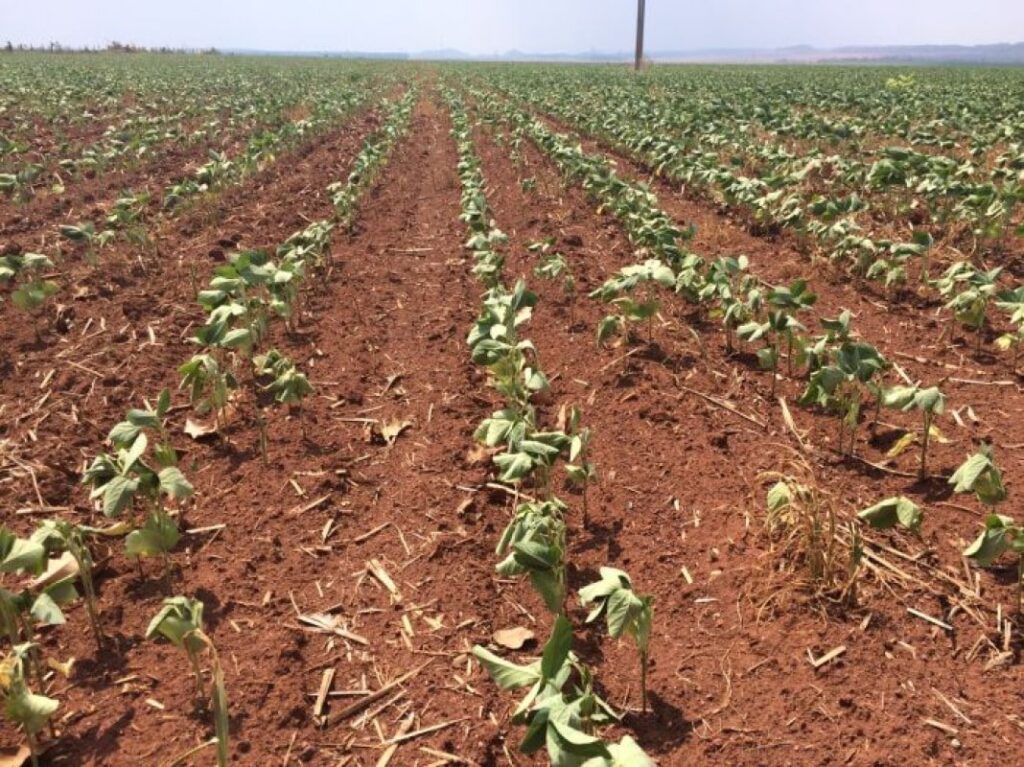
Cassava (Manihot esculenta Crantz) plays a fundamental socioeconomic role in Brazilian agribusiness, being one of the main sources of carbohydrates and raw materials for several industries. However, its productivity and quality are often limited by nutritional deficiencies, especially in tropical soils, which are naturally poor in nutrients or which, after years of intensive cultivation and inadequate liming practices, present imbalances. Among micronutrients, zinc (Zn) stands out as one of the most critical for the healthy development of the crop. Calcareous soils, for example, can worsen the unavailability of zinc, directly impacting vegetative growth and root formation. Route Chemicals, aware of these challenges, offers innovative solutions such as Route Zinc Fertilizer, developed to overcome these deficiencies and optimize the productive potential of cassava, ensuring greater vegetative development and superior quality roots.
Zinc is an essential micronutrient for cassava, acting as a cofactor in several enzymes involved in vital metabolic processes, such as protein synthesis, carbohydrate metabolism and the regulation of plant growth [1]. Zinc deficiency in cassava plants can lead to a number of visible symptoms, including interveinal chlorosis (yellowing between the veins of young leaves), reduced leaf size, shortening of the internodes and, in severe cases, tissue necrosis [2]. These symptoms reflect an impairment in photosynthesis and the production of growth hormones, resulting in stunted vegetative development and, consequently, a significant reduction in productivity.
In Brazilian soils, especially those with a history of excessive liming or naturally calcareous soils, zinc availability is drastically reduced. The increase in soil pH, caused by liming, increases the adsorption of zinc to soil colloids, making it less accessible to plants [3]. Studies show that zinc deficiency can cause productivity losses in cassava ranging from 20% to 50%, depending on the severity of the deficiency and growing conditions [4]. For example, in research carried out in deficient soils, adequate zinc application resulted in root productivity increases of up to 30% compared to untreated areas, as well as improving root quality, with higher starch content.
Route Chemicals, aware of the importance of this micronutrient, developed **Route Zinc Fertilizer**, an innovative and high-performance solution. This fertilizer is formulated with chelated zinc, which guarantees greater stability and bioavailability of the nutrient, even in unfavorable soil conditions, such as calcareous soils. Chelatization protects zinc from undesirable reactions in the soil, allowing it to be absorbed more efficiently by cassava roots and leaves. Furthermore, Route Zinc Fertilizer is compatible with **Route 10 Boron Fertilizer**, which has 10% w/v of boron in a chelated formulation, and with **Route Adjuvants**, which improve the efficiency of foliar application, ensuring superior absorption of nutrients.
The way of applying Zinc Route Fertilizer must be adjusted to the needs of the crop and the characteristics of the soil. Foliar application is recommended, with specific dosages ranging from 0.5 to 1.5 L/ha, depending on the level of deficiency and the plant's stage of development. The ideal application times are during initial vegetative development and during the tuberization period, when the demand for zinc is highest. The application methodology must follow good agricultural practices, using sprayers with good coverage and adequate spray volume. The expected results with the use of Route Zinc Fertilizer are an average increase of 15-25% in root productivity, better vegetative development, greater resistance to abiotic stresses and, consequently, cassava roots with better quality and higher starch content, positively impacting the producer's profitability.
[1] Agrolink. Zinc – everything you need to know about this fertilizer. Available at: [https://www.agrolink.com.br/fertilizantes/nutrientes/zinco_466875.html](https://www.agrolink.com.br/fertilizantes/nutrientes/zinco_466875.html). Accessed on: 7 Aug. 2025.
[2] Crop Nutrition. How does zinc deficiency affect crops? Available at: [https://nutricaodesafras.com.br/deficiencia-de-zinco](https://nutricaodesafras.com.br/deficiencia-de-zinco). Accessed on: 7 Aug. 2025.
[3] Embrapa. Liming and fertilization for cassava. Available at: [https://www.infoteca.cnptia.embrapa.br/infoteca/bitstream/doc/1134676/1/cap11-livro-RecomendacaoCalagemAdubacao-AnaLuciaBorges-AINFO.pdf] (https://www.infoteca.cnptia.embrapa.br/infoteca/bitstream/doc/1134676/1/cap11-livro-RecomendacaoCalagemAdubacao-AnaLuciaBorges-AINFO.pdf). Accessed on: 7 Aug. 2025.
[4] Embrapa. Effect of applying different doses of zinc on productivity. Available at: [https://www.alice.cnptia.embrapa.br/alice/bitstream/doc/159374/1/OPB1351.pdf](https://www.alice.embrapa.br/alice/bitstream/doc/159374/1/OPB1351.pdf). Accessed on: 7 Aug. 2025.
The effectiveness of Route Chemicals solutions is backed by a solid foundation of research and development. The company continually invests in scientific validation, with more than 50 studies and research carried out in partnership with federal universities and renowned research institutions. These studies prove the efficiency of Route Zinc Fertilizer and other products in the line in overcoming nutritional deficiencies and increasing agricultural productivity. The practical results obtained in the field, in different regions and soil conditions, consistently demonstrate the superiority of Route products compared to other solutions available on the market. Transparency and scientific rigor are pillars of Route Chemicals, ensuring that rural producers have access to proven effective technologies to optimize their crops.
[5] UFRA. The influence of essential nutrients on growth. Available at: [https://bdta.ufra.edu.br/jspui/bitstream/123456789/4426/4/A%20INFLU%C3%8ANCIA%20DOS%20NUTRIENTES%20ESSENCIAIS%20NO%20CRESCIMENTO%20.pdf] (https://bdta.ufra.edu.br/jspui/bitstream/123456789/4426/4/A%20INFLU%C3%8ANCIA%20DOS%20NUTRIENTES%20ESSENCIAIS%20NO%20CRESCIMENTO%20.pdf). Accessed on: 7 Aug. 2025.
In short, zinc deficiency represents a significant bottleneck for cassava productivity and quality, especially in calcareous soils. The adoption of specific nutritional solutions, such as Route Zinc Fertilizer, is crucial to overcoming these challenges and ensuring the maximum productive potential of the crop. With a chelated formulation and proven effectiveness, Route Chemicals products are the smart choice for farmers looking for innovation and results. Don't let zinc deficiency limit your production! Contact Route Chemicals to learn more about how our solutions can transform your cassava crop. Visit our website at [https://routechemicals.com.br](https://routechemicals.com.br) and follow us on Instagram: [@routeagrichemicals](https://www.instagram.com/routeagrichemicals) to stay up to date with the latest news and tips for your cultivation.
References
[1] AGROLINK. Zinc – everything you need to know about this fertilizer. Available at: <https://www.agrolink.com.br/fertilizantes/nutrientes/zinco_466875.html>. Accessed on: 7 Aug. 2025.
[2] CROP NUTRITION. How does zinc deficiency affect crops? Available at: <https://nutricaodesafras.com.br/deficiencia-de-zinco>. Accessed on: 7 Aug. 2025.
[3] EMBRAPA. Liming and fertilization for cassava. Available at: <https://www.infoteca.cnptia.embrapa.br/infoteca/bitstream/doc/1134676/1/cap11-livro-RecomendacaoCalagemAdubacao-AnaLuciaBorges-AINFO.pdf>. Accessed on: 7 Aug. 2025.
[4] EMBRAPA. Effect of applying different doses of zinc on productivity. Available at: <https://www.alice.cnptia.embrapa.br/alice/bitstream/doc/159374/1/OPB1351.pdf>. Accessed on: 7 Aug. 2025.
[5] UFRA. The influence of essential nutrients on growth. Available at: <https://bdta.ufra.edu.br/jspui/bitstream/123456789/4426/4/A%20INFLU%C3%8ANCIA%20DOS%20NUTRIENTES%20ESSENCIAIS%20NO%20CRESCIMENTO%20.pdf>. Accessed on: 7 Aug. 2025.