Cotton, a pillar of Brazilian agribusiness, stands out as one of the most strategic crops, boosting the economy and generating thousands of jobs. However, for Brazil to maintain its prominent position on the global stage, it is imperative to optimize each stage of production. One of the most critical challenges faced by cotton farmers is the deficiency of micronutrients, especially boron, which directly impacts fiber quality and productivity. A lack of this essential element can compromise the plant's development, resulting in significant losses. Recognizing this gap, Route Chemicals presents Route 10 Boron Fertilizer, an innovative and scientifically proven solution, developed to overcome boron deficiencies in cotton, ensuring greater fiber quality and raising productivity levels in the Brazilian field.
Boron (B) is an essential micronutrient for cotton, playing crucial roles in carbohydrate metabolism and transport, pollen grain germination, pollen tube growth and cell wall formation [1]. Its deficiency, even if subclinical, can lead to serious harm. In Brazilian soils, boron deficiency is common due to its high mobility and leaching, especially in sandy soils with low organic matter content. Studies indicate that boron is the micronutrient that most frequently presents deficiency problems in cotton [2].
The impacts of boron deficiency on cotton productivity are multifaceted. The lack of this micronutrient directly affects flower setting and fruit retention, resulting in excessive loss of flower buds, flowers and new fruits. This translates into significant production losses. Research shows that borate fertilizer can provide average productivity increases of 150 kg/ha of seed cotton, with some studies reporting increases of up to 670 kg/ha in deficient soils [1]. In addition to productivity, boron deficiency compromises fiber quality, affecting its length and maturity, and reducing breaking strength [1, 3].
Route Chemicals' solution to this challenge is **Boron 10 Route Fertilizer**. This product stands out for its chelated formulation, containing 10% w/v boron, which guarantees high foliar absorption and superior efficiency compared to more soluble boron sources subject to leaching. Chelatization protects boron, allowing it to be absorbed more effectively by the plant and transported to points of greatest metabolic demand, such as flowers and fruits. This ensures continuous availability of the nutrient throughout the crop cycle, minimizing losses and optimizing use by the plant.
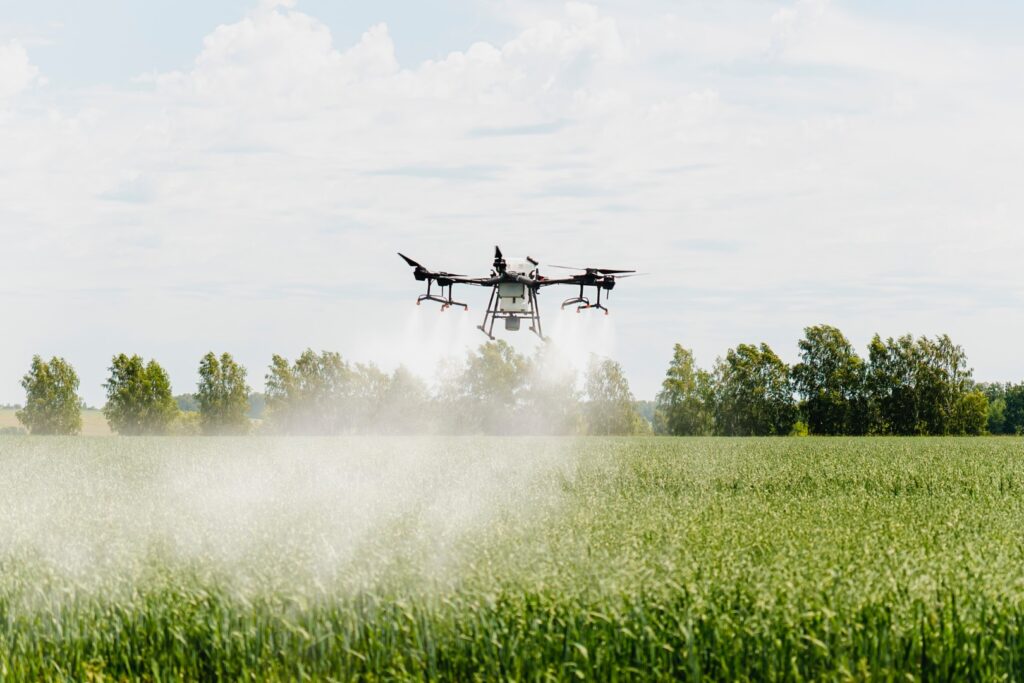
The method of applying Boro 10 Route Fertilizer is flexible and adapted to the needs of the cotton plant. Specific dosages must follow Route Chemicals' technical recommendations, which are based on soil and foliar analyzes and the crop's stage of development. Generally, foliar application is recommended during phases of greatest demand for boron, such as flowering and apple formation, to maximize floral setting and fruit filling. The use of Route adjuvants, such as adhesive spreaders or surfactants, can further improve application efficiency, ensuring uniform coverage and optimizing boron foliar absorption. The application methodology must be carried out with calibrated sprayers, ensuring homogeneous distribution of the product.
The results expected from the application of Boro 10 Route Fertilizer are quantifiable and impactful. Producers can expect a significant increase in the number of apples per plant, greater boll weight and, consequently, an increase in the crop's total productivity. In terms of fiber quality, an improvement in micronaire, length and resistance to rupture is expected, essential characteristics for the product's appreciation in the market. Optimizing boron nutrition contributes to stronger and more uniform fiber cotton, meeting the demands of the textile industry and adding value to the cotton farmer's production.
The effectiveness of Boro 10 Route Fertilizer is not just based on theoretical principles, but is solidly proven by an extensive research and development program. Route Chemicals continually invests in scientific validation, carrying out more than 50 studies in partnership with renowned federal universities and research institutions throughout Brazil. These studies, conducted under diverse soil and climate conditions, consistently demonstrate the benefits of applying Boron 10 Route to cotton crops.
The practical results of these research confirm the increases in productivity and the improvement in fiber quality observed in the field. Comparisons with other sources of boron and with untreated areas highlight the superiority of the Boron 10 Route chelated formulation in terms of absorption, translocation and, consequently, positive impact on cotton development. This robust scientific basis guarantees producers the confidence that they are using a high-performance product, developed with rigor and adapted to the realities of Brazilian agriculture.
In short, boron deficiency represents a significant bottleneck for the productivity and quality of cotton fiber in Brazil. The Boro 10 Route Fertilizer solution from Route Chemicals appears as an indispensable tool to overcome this challenge, offering a high-tech formulation that guarantees adequate nutrition for the cotton plant. By investing in Boro 10 Route, cotton farmers not only correct a critical nutritional deficiency, but also boost productivity and increase the quality of their fiber, ensuring greater profitability and competitiveness in the market.
Don't let boron deficiency limit your crop's potential. Contact the Route Chemicals technical team for an accurate diagnosis and personalized recommendation. Visit our website at [https://routechemicals.com.br](https://routechemicals.com.br) and follow us on Instagram [@routeagrichemicals](https://www.instagram.com/routeagrichemicals) for more information and news about the solutions that transform Brazilian agriculture.
References
[1] GREEN.AG. How important is boron in cotton? Available at: <https://blog.verde.ag/pt/nutricao-de-plantas/importancia-boro-no-algodao/>. Accessed on: 7 Aug. 2025.
[2] LOPES, P. M. S. L. Application of Boron and Silicon increases the productivity and quality of cotton fibers. 2022. Dissertation (Master’s in Agronomy) – Federal University of Mato Grosso do Sul, Chapadão do Sul, 2022. Available at: <https://repositorio.ufms.br/handle/123456789/4424>. Accessed on: 7 Aug. 2025.
[3] SCIELO. Growth, productivity and quality of colored cotton fiber influenced by plant population. Available at: <https://www.scielo.br/j/rceres/a/7fQvWKVjgDN3NHZywkQPNxz/>. Accessed on: 7 Aug. 2025.
[4] U.S. BORAX. Boron deficiency in cotton. Available at: <https://agricultura-brasil.borax.com/crop-guides/fiber-crops/cotton>. Accessed on: 7 Aug. 2025.
[5] AGROLINK. Boron – everything you need to know about this fertilizer. Available at: <https://www.agrolink.com.br/fertilizantes/nutrientes/boro_467225.html>. Accessed on: 7 Aug. 2025.