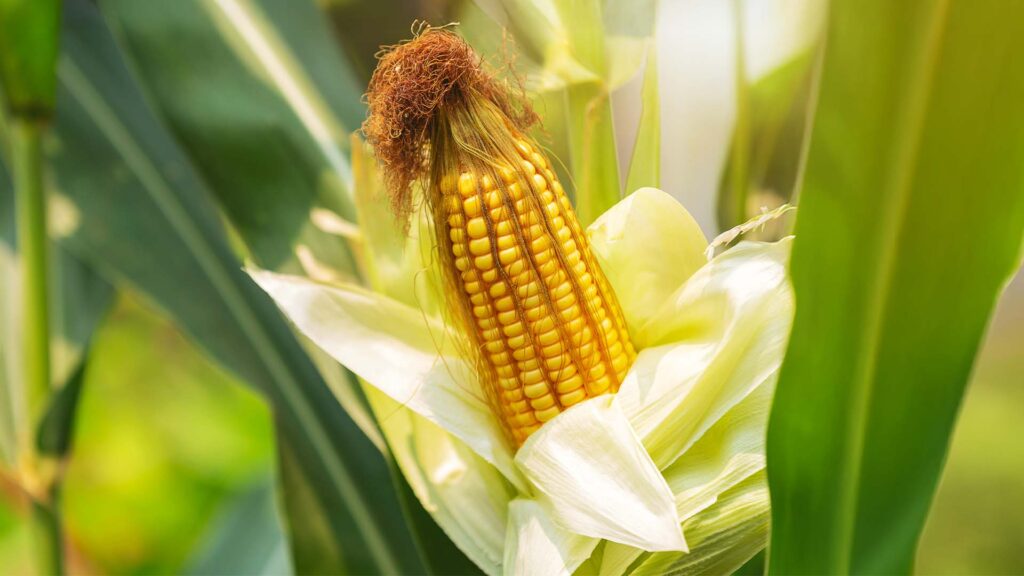
Corn, a pillar of Brazilian agribusiness, plays a crucial role in the country's economy and food security. With increasingly significant harvests, the search for maximizing grain productivity and quality is constant. However, nutritional challenges can compromise this potential, especially at critical stages of crop development. Pollination, for example, is a vital process that, if failed, directly impacts yield. Micronutrients such as Boron (B) and Zinc (Zn) are essential for the formation and viability of the pollen grain, as well as for the development of the pollen tube. Deficiencies in these elements, often not visible to the naked eye, can lead to significant pollination failures, resulting in poorly grained ears and productivity losses. Faced with this scenario, Route Chemicals presents an innovative and effective solution: Route Boron 10 + Zinc Fertilizer, formulated for foliar application in the VT stage, ensuring precise nutrition and overcoming these deficiencies, optimizing pollination and increasing the productive potential of VT corn.
Deficiency of micronutrients, such as Boron (B) and Zinc (Zn), is a limiting factor for corn productivity, especially in tropical and subtropical soils, where leaching and low natural availability are common. Boron is crucial for the formation of the cell wall, sugar transport, cell division and, fundamentally, for pollen grain germination and pollen tube growth. Its absence or low availability directly affects pollen viability and fertilization, resulting in pollination failures and, consequently, ears with incomplete graining. Studies indicate that Boron deficiency can reduce corn productivity by up to 30% [1].
Zinc, in turn, acts as an enzymatic cofactor in several metabolic reactions, including the synthesis of proteins, carbohydrates and auxins, hormones essential for plant growth. It is vital for early plant development, grain formation and, in particular, pollen production and fertility. Zinc deficiency can lead to symptoms such as shortened internodes, yellowing leaves and, most critically, a reduction in grain production due to poor ear formation and pollination failure. Research shows that a lack of Zinc can reduce corn productivity by up to 20% [2].
Route Chemicals' solution to overcome these limitations is Route Boron 10 + Zinc Fertilizer. This product is formulated with Boron at 10% w/v and Zinc, both in a chelated formulation, which guarantees high foliar absorption and mobility within the plant. Chelation technology protects micronutrients from unwanted reactions in the spray tank and on the leaf surface, maximizing the efficiency of absorption and translocation to sites of demand, such as reproductive structures.
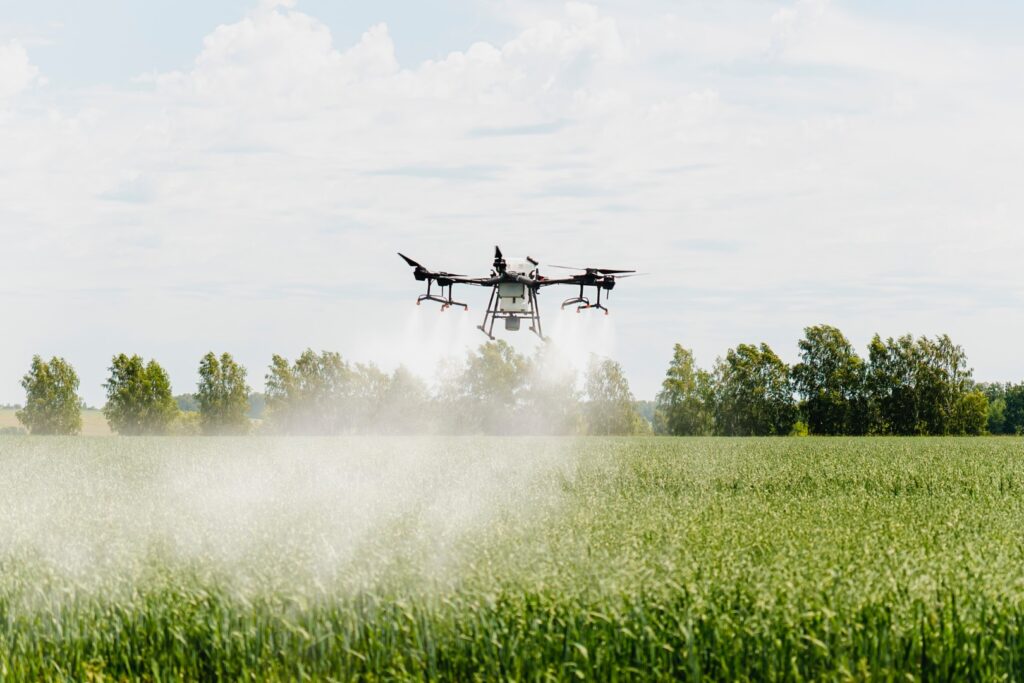
Foliar application of Fertilizer Boro 10 + Zinc Route is recommended in the VT (tasseling) stage, with a dosage of 0.5 to 1 L/ha. This moment is strategic, as it precedes and coincides with the period of greatest demand for Boron and Zinc for pollination and grain formation. The application methodology must be carried out via foliar spraying, preferably with the use of Route adjuvants, which optimize coverage, penetration and absorption of nutrients, reducing losses due to drift and washing. The application can be done in conjunction with other pesticides, as long as the compatibility of the mixture is respected.
The results expected with the application of Fertilizer Boro 10 + Zinc Route are significant. Producers can observe an increase in the grain setting rate, a reduction in pollination failures and, consequently, an increase in productivity that can vary from 5 to 15 bags/hectare, depending on the initial deficiency conditions and crop management. In addition to the quantitative gain, there is an improvement in the quality of the grains, with greater weight and uniformity, resulting in greater profitability for the producer.
Scientific Validation
The effectiveness of Route Boron 10 + Zinc Fertilizer is backed by a solid scientific basis. Route Chemicals continually invests in research and development, accumulating more than 50 studies and validations in partnership with renowned federal universities and research institutions throughout Brazil. These studies, conducted in different regions and under varied soil and climate conditions, prove the product's superior performance in correcting Boron and Zinc deficiencies and increasing corn productivity.
Practical field results, obtained in crops from producers who adopted Route technology, consistently demonstrate an increase in the number of grains per ear, an improvement in grain quality and an average increase in productivity. Compared to conventional management or lower technology products, Fertilizer Boron 10 + Zinc Route stands out for its high bioavailability and the quick and efficient response of the crop, translating into a superior return on investment for the farmer. Continuous validation and transparency in results reinforce Route Chemicals' commitment to innovation and sustainability in Brazilian agriculture.
In short, strategic foliar nutrition with Boron and Zinc in VT corn is a competitive advantage to maximize pollination and, consequently, crop productivity. Route Chemicals' Boron 10 + Zinc Fertilizer offers a technically and scientifically proven solution to overcome nutritional flaws that limit corn's productive potential. Don't let micronutrient deficiency compromise your harvest. Invest in cutting-edge technology and guarantee fuller ears and greater profitability.
To learn more about Route Boron 10 + Zinc Fertilizer and other innovative solutions for your crops, visit our website: [https://routechemicals.com.br](https://routechemicals.com.br) or follow us on Instagram: [@routeagrichemicals](https://www.instagram.com/routeagrichemicals). Our experts are ready to offer the technical support necessary for the success of your production.
References
[1] TOMICIOLI, R. M.; LEAL, F. T. et al. Limitation of productivity due to boron deficiency in soybean, corn, beans and coffee crops. South American Sciences, vol. 2, no. 1, p. 1-15, 2021. Available at: https://southamericansciences.com.br/index.php/sas/article/view/100. Accessed on: 07 Aug. 2025.
[2] KUME, W. T.; CAMPOS, L. M.; RIBEIRO, R.; CAIONE, G. Nutritional disorders caused by deficiency and excess of zinc in corn plants. Scientific, vol. 49, n. 2, p. 89-97, 2021. Available at: https://cientifica.dracena.unesp.br/index.php/cientifica/article/view/1377. Accessed on: 07 Aug. 2025.
[3] JAMAMI, N.; BÜLL, L. T.; CORRÊA, J. C. et al. Response of the corn crop (Zea mays L.) to the application of boron and zinc in the soil. Acta Scientiarum Agronomy, v. 28, no. 1, p. 99-105, 2006. Available at: https://www.redalyc.org/pdf/3030/303026568004.pdf. Accessed on: 07 Aug. 2025.
[4] COSTA JÚNIOR, J. R. Fertilization with boron and zinc in corn cultivation. 2021. Dissertation (Master’s in Bioenergy and Grains) – Instituto Federal Goiano, Rio Verde, 2021. Available at: https://repositorio.ifgoiano.edu.br/handle/prefix/1758. Accessed on: 07 Aug. 2025.
[5] NOGUEIRA, L. M. **Doses and methods of application of boron and zinc fertilization in corn crops**. 2016. Dissertation (Masters in Agronomy) – Universidade Estadual Paulista, Botucatu, 2016. Available at: https://repositorio.unesp.br/items/9f6b107e-9fd6-471b-9fa4-f32c55269e59. Accessed on: 07 Aug. 2025.
[6] FANCELLI, A. L. Corn nutrition and fertilization. In: BÜLL, L. T.; CANTARELLA, H. **Corn cultivation: factors that affect productivity**. Piracicaba: POTAFOS, 2010. p. 63-145. [7] EMBRAPA CORN AND SORGHUM. **Corn Nutrition and Fertilization**. Technical Circular 78. Sete Lagoas: Embrapa Milho e Sorgo, 2009. Available at: https://www.infoteca.cnptia.embrapa.br/bitstream/doc/490410/1/Circ78.pdf. Accessed on: 07 Aug. 2025.