Soybeans (Glycine max) are one of the most important crops for Brazilian agribusiness, playing a crucial role in the economy and in the production of food and feed. Brazil stands out as one of the largest producers and exporters of soy in the world, with vast areas of cultivation, especially in the Cerrado region. However, the success of soybean cultivation directly depends on adequate nutritional management, which is often challenged by the intrinsic characteristics of Brazilian soils, particularly those of the Cerrado. These soils, naturally acidic and with low fertility, present significant limitations in the availability of micronutrients essential for the full development of the plant and obtaining high productivity. Among these micronutrients, zinc (Zn) and boron (B) are often the most deficient, directly impacting growth, flowering, grain formation and resistance to stress. To overcome these barriers and guarantee the maximum expression of the productive potential of soybeans, Route Chemicals presents an innovative and scientifically validated solution: the nutritional program with Zinc Route and Boron 10 Route. This approach aims to correct micronutrient deficiencies, promoting more vigorous and productive plants, and ensuring producer profitability.
Technical Development
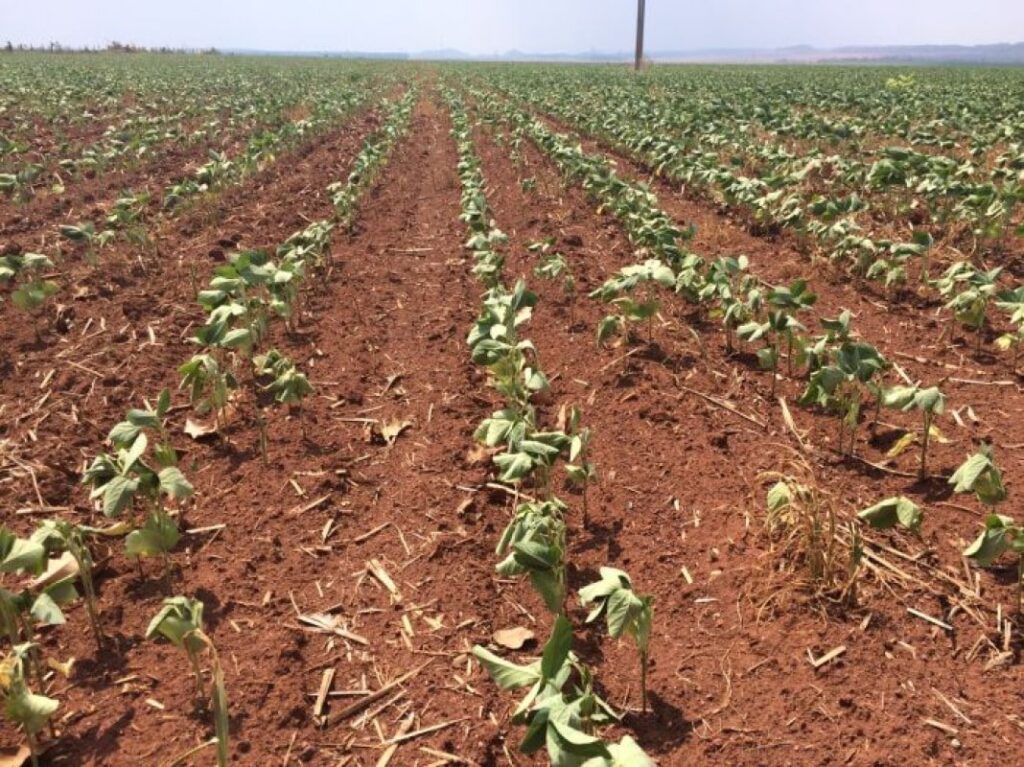
Micronutrient deficiency is one of the main limiting factors for soybean productivity in tropical soils, especially in the Brazilian Cerrado. The acidity and low organic matter of these soils, combined with the high fixation of some elements, make the availability of zinc (Zn) and boron (B) a constant challenge for producers. Zinc is crucial for the synthesis of enzymes and proteins, acting directly on the growth of shoots and roots, the formation of chlorophyll and resistance to oxidative stress. Its deficiency can lead to symptoms such as interveinal chlorosis in young leaves, reduced leaf size and short internodes, severely impacting plant development and, consequently, productivity. Studies indicate that zinc deficiency can reduce soybean productivity by up to 30% in deficient soils [1].
Boron, in turn, is essential for the growth of floral tips and tissues, the formation of the cell wall, the transport of sugars, pollination and fertilization. The lack of boron compromises the formation of pods and grains, resulting in aborted flowers and fruits, and poor seed formation. Research by U.S. Borax [2] concluded that boron is the most deficient micronutrient in Brazilian soils, followed by zinc. Boron deficiency can cause productivity losses of up to 40% in soybean crops [3].
Route Chemicals offers a robust solution to overcome these nutritional limitations: **Route 10 Boron Fertilizer** and **Route Zinc Fertilizer**. Boro 10 Route is a foliar fertilizer with 10% w/v boron, formulated with chelation technology that guarantees high foliar absorption and rapid translocation in the plant. Its application is essential to ensure pollination and grain formation, reducing flower and fruit abortion. For soybeans, the recommended dosage is 0.5 to 1 L/ha, applied between the R1 (beginning of flowering) and R2 (full flowering) stages, critical moments for defining productive potential.
Route Zinc Fertilizer is a fluid fertilizer with balanced zinc, essential for growth, protein formation, floral development and grain and seed production. It promotes the growth of shoots and roots, reduces symptoms of nutritional deficiency and increases tolerance to oxidative stress. The dosage and application time of Zinc Route must be adjusted according to soil and foliar analysis, but generally focuses on the initial stages of crop development to ensure good establishment and plant vigor.
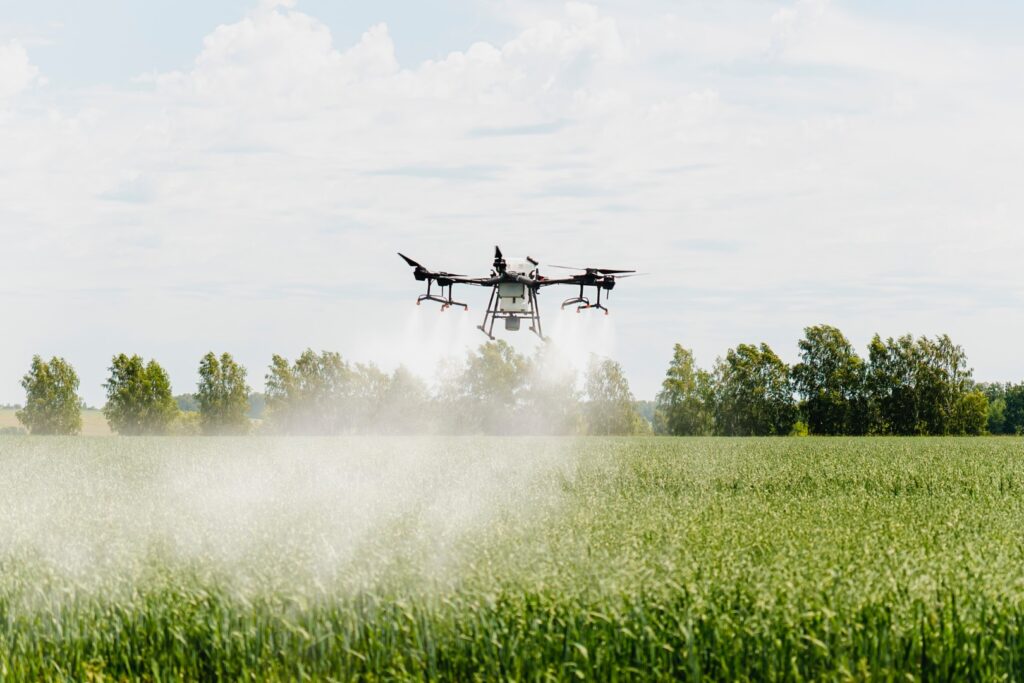
To optimize application efficiency, Route Chemicals recommends the use of its adjuvants, such as Route-N or Route-PH, which improve the coverage, adhesion and compatibility of the mixture, maximizing the absorption of micronutrients. The application methodology must be foliar, ensuring rapid availability of nutrients to the plant. With the implementation of this nutritional program, the expected results include a significant increase in soybean productivity, with gains that can vary from 5 to 15 bags per hectare in areas with zinc and boron deficiency, in addition to more vigorous plants, with better root development and greater resistance to diseases and environmental stresses. These gains are driven by improved flowering, pod setting and grain filling, resulting in a greater thousand-grain weight and, consequently, greater final yield.
Scientific Validation
The effectiveness of Route Chemicals products is proven by an extensive research and development program. The company continually invests in scientific validation, carrying out more than 50 studies in partnership with federal universities and renowned research institutions, such as Agroensaio. These rigorous studies, conducted in diverse regions and soil conditions, consistently demonstrate the benefits of the Route 10 Zinc and Boron 10 nutritional program in soybean crops. The practical results obtained in the field corroborate the scientific data, showing increased productivity, improved grain quality and greater plant health. Comparisons with untreated areas or conventional nutritional programs show the superiority of Route Chemicals' approach, which translates into a significant return on investment for the producer. Robust scientific validation guarantees the reliability and performance of products, offering farmers the security of using cutting-edge technologies with proven results.
Conclusion
Advanced nutritional management, with a focus on correcting zinc and boron deficiencies, is a fundamental pillar for achieving high productivity in soybeans, especially in the challenging Cerrado soils. Route Chemicals' nutritional program, with Route Zinc Fertilizer and Route Boron 10 Fertilizer, offers a complete and scientifically proven solution to optimize the nutrition of your crops, resulting in more vigorous plants, greater pod and grain yield, and, consequently, a significant increase in productivity and profitability. Don't let micronutrient deficiencies limit the potential of your soybeans. Invest in technology and science to harvest more and better. Contact one of our specialized consultants to find out how Route Chemicals can transform your farming. Visit our website at [https://routechemicals.com.br](https://routechemicals.com.br) and follow us on Instagram [@routeagrichemicals](https://www.instagram.com/routeagrichemicals) for more information and management tips.
References
[1] Crop Nutrition. Zinc deficiency in soybeans: what are the symptoms and causes. Available at: <https://nutricaodesafras.com.br/deficiencia-de-zinco-na-soja>. Accessed on: 7 Aug. 2025.
[2] U.S. Borax. Boron availability in Brazilian soils. Available at: <https://agricultura-brasil.borax.com/blog/september-2023/boron-availability-brazilian-soles>. Accessed on: 7 Aug. 2025.
[3] CHB. Boron deficiency in soybeans: How to maintain productivity?. Available at: <https://chb.com.br/agro/blog/deficiencia-de-boro-na-soja-como-manter-a-produtividade>. Accessed on: 7 Aug. 2025.
[4] TOMICIOLI, R. M.; LEAL, F. T. Productivity limitation due to boron deficiency in soybean, corn, beans and coffee crops. South American Sciences, vol. 4, no. 1, p. 1-10, 2021. Available at: <https://southamericansciences.com.br/index.php/sas/article/view/100>. Accessed on: 7 Aug. 2025.
[5] NAKAO, A. H.; COSTA, N. R.; ANDREOTTI, M. Agronomic characteristics and physiological quality of soybean seeds as a function of foliar fertilization with boron and zinc. Agricultural Culture Magazine, v. 27, no. 3, p. 312-327, 2018. Available at: <https://whoamiojs.unesp.br/index.php/rculturaagronomica/article/view/2446-8355.2018v27n3p312-327>. Accessed on: 7 Aug. 2025.
[6] HINOVE. Balanced micronutrients at the right time: Ensuring soybean productivity. Available at: <https://hinove.com/micronutrientes-balanceados-e-no-momento-certo-garantindo-a-produtividade-da-soja/>. Accessed on: 7 Aug. 2025.