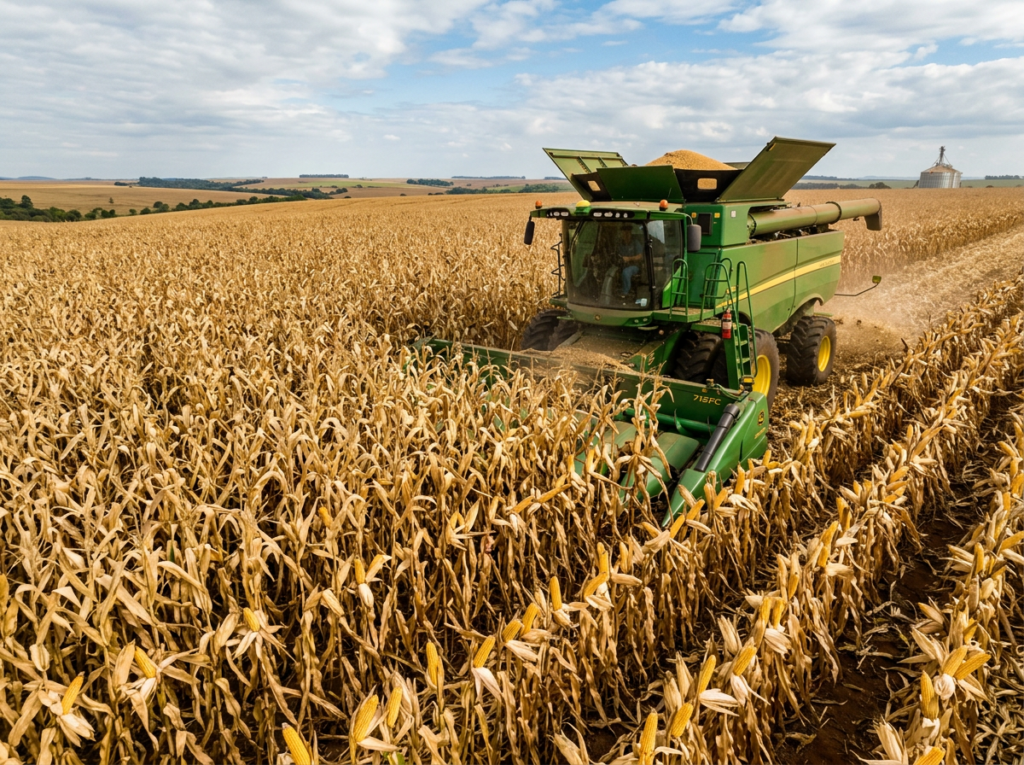
Second-crop corn, also known as second-crop corn, has become one of the main crops in Brazilian agribusiness in recent decades. Cultivated after the soybean harvest, mainly in the Center-West, South and Southeast regions of the country, off-season corn currently represents more than 75% of national corn production, surpassing the production of summer corn.
The expansion of this type of cultivation is directly related to the development of early cultivars, the improvement of management techniques and the use of advanced agricultural technologies. However, harvesting safrinha corn presents specific challenges, mainly related to adverse weather conditions, such as frost, water deficit and the occurrence of pests and diseases.
The safrinha corn harvest window is a critical moment for the producer, requiring detailed planning and precise decision-making to guarantee the quality of the grains and minimize losses. Correct harvest timing, combined with the use of appropriate equipment and efficient management practices, are crucial to the success of the operation.
The corn crop faces peculiar climatic conditions, being cultivated in periods when rainfall is scarcer and temperatures are lower. These factors directly impact the crop cycle, potentially prolonging the drying period of grains in the field and increasing the risk of losses due to bad weather. Constant monitoring of crops is essential to identify the ideal harvest time, considering grain moisture, plant health and expected weather conditions.
The ideal humidity for harvesting corn is between 18% and 22%, ensuring a lower incidence of broken and burned grains. Harvests carried out with very high humidity require greater energy expenditure for drying, while late harvests increase the risk of plants falling over and pest attacks. Correct adjustment of harvesters is essential to minimize losses, which can reach more than 10% in poorly conducted operations.
The main pests that affect off-season corn include corn leafhoppers, fall armyworms and various stink bugs. Diseases such as stunting, rust and leaf spots also pose significant threats to productivity. The integrated management of pests and diseases, with the use of efficient agricultural pesticides, is essential to preserve the productive potential of the crop until harvest.
Post-harvest logistics is another crucial aspect, involving the adequate transport of grains, drying in storage units and storage under controlled conditions. Failures in these steps can compromise the quality of the final product, reducing its commercial value.
Route Chemicals offers a complete portfolio of solutions for safrinha corn cultivation, ranging from seed treatment to products for application during the production cycle. The fungicides and insecticides from the Route Chemicals line provide efficient control of the main pests and diseases that affect corn, ensuring the health of the crop until harvest.
The company's adjuvants and mineral oils enhance the action of agricultural pesticides, increasing the effectiveness of applications and reducing product waste. In addition, Route Chemicals provides specific foliar fertilizers for off-season corn, contributing to adequate grain filling and maximizing productivity. The company's specialized technical support helps producers in developing customized management programs for each production reality.
Harvesting safrinha corn is a decisive moment that requires planning, technology and appropriate management to ensure the success of the harvest. Climatic, phytosanitary and logistical challenges demand integrated solutions that ensure grain productivity and quality. Route Chemicals positions itself as a strategic partner for corn producers, offering cutting-edge technologies to face the challenges of the Brazilian harvest season.
References
CONAB. Monitoring the Brazilian grain harvest. Brasília: Conab, 2023.
EMBRAPA. Cultivation of off-season corn. Sete Lagoas: Embrapa Milho e Sorgo, 2022.
CRUZ, J. C.; PEREIRA FILHO, I. A. Corn production system. 8th ed. Sete Lagoas: Embrapa Corn and Sorgo, 2021.