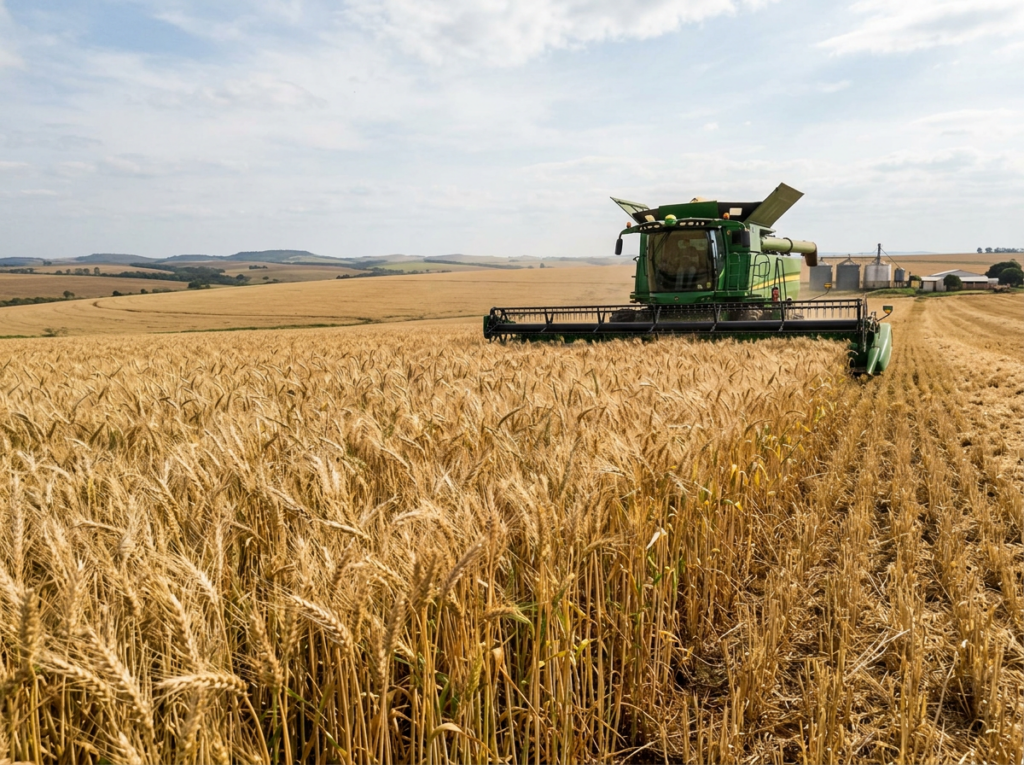
Wheat is one of the most important cereals in the world, being the basis of human nutrition in several countries. In Brazil, wheat production is mainly concentrated in the southern states, with emphasis on Paraná and Rio Grande do Sul, which account for more than 90% of national production. Despite the economic and strategic relevance of the cereal, Brazil is still dependent on wheat imports, mainly from Argentina, to meet its domestic demand.
Wheat cultivation in Brazil has particularities in relation to the main world producers, being carried out in subtropical and tropical conditions, which requires adapted cultivars and specific management practices. Climatic conditions during the crop cycle, especially in the flowering and grain filling phase, are decisive for the productivity and quality of the final product.
In recent years, Brazilian wheat cultivation has undergone significant transformations, with the development of more productive cultivars, resistant to diseases and adapted to different regions. The use of modern technologies and integrated crop management have contributed to increasing the competitiveness of the national wheat industry.
The wheat cycle in Brazil varies between 110 and 150 days, depending on the cultivar and climatic conditions. Planting generally takes place between April and July, with harvest between September and December. Choosing the appropriate cultivar for each region is fundamental to the success of the crop, considering factors such as cold tolerance, disease resistance and production cycle.
Soil fertility is a crucial aspect for wheat cultivation, with nitrogen being the nutrient most demanded by the crop. Adequate fertilization, based on soil analysis and foliar diagnosis, allows you to optimize the use of fertilizers and maximize productivity. Correcting soil acidity through liming is also essential, since wheat is sensitive to aluminum toxicity.
The main diseases that affect wheat crops in Brazil include leaf rust, blast, head blight and leaf spots. Blast, in particular, has caused significant damage to producers, especially in hotter and more humid regions. Integrated disease management, using resistant cultivars, crop rotation and application of fungicides, is essential for the efficient control of these pathogens.
Weed control in wheat crops must be carried out preventively and curatively, using selective herbicides and appropriate cultural practices. The presence of invasive plants compromises the development of the crop and can significantly compromise final productivity.
Route Chemicals offers advanced technological solutions for wheat cultivation, contributing to increased grain productivity and quality. The company's fungicides provide efficient control of the main diseases that affect the crop, including rust, blast and Fusarium head blight. Route Chemicals' line of selective herbicides guarantees effective control of weeds, preserving crop development.
Route Chemicals' foliar fertilizers and biostimulants enhance plant metabolism, contributing to adequate grain filling and obtaining products with higher industrial quality. The company's specialized technical support helps wheat farmers develop efficient and customized management programs.
Wheat cultivation in Brazil represents a strategic activity for the country's food security, requiring the use of modern technologies and efficient management practices. Phytosanitary, nutritional and climate challenges require integrated solutions that ensure grain productivity and quality. Route Chemicals consolidates itself as a partner for Brazilian wheat producers, offering innovative products and excellent technical support.
References
EMBRAPA. Technical information for wheat and triticale. Brasília: Embrapa Trigo, 2022.
CONAB. Monitoring the Brazilian grain harvest: wheat. Brasília: Conab, 2023.
CUNHA, G. R. Wheat in Brazil: bases for competitive and sustainable production. Passo Fundo: Embrapa Trigo, 2021.