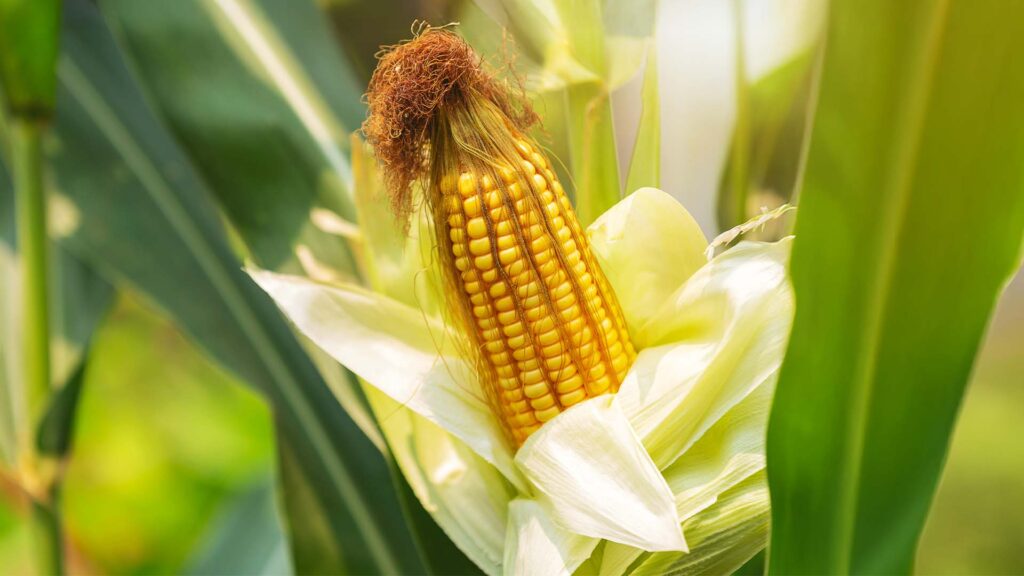
If there is a phase that really defines the productive potential of off-season corn, it is the development of the ear.
There is no room for error here.
This phase begins even earlier than many people imagine, around stages V6 to V8, when the plant begins to define its reproductive beginnings. In other words, before you even see any external sign, the plant is already deciding how many grains it can produce.
It is at this moment that factors such as nutrition, water stress and health have a direct impact on ear formation.
Nutritional deficiencies, especially nitrogen and potassium, can limit the number of grain rows. And that can't be corrected later.
The same goes for water stress. Lack of water at this stage silently reduces production potential. When the problem appears visually, the damage has already happened.
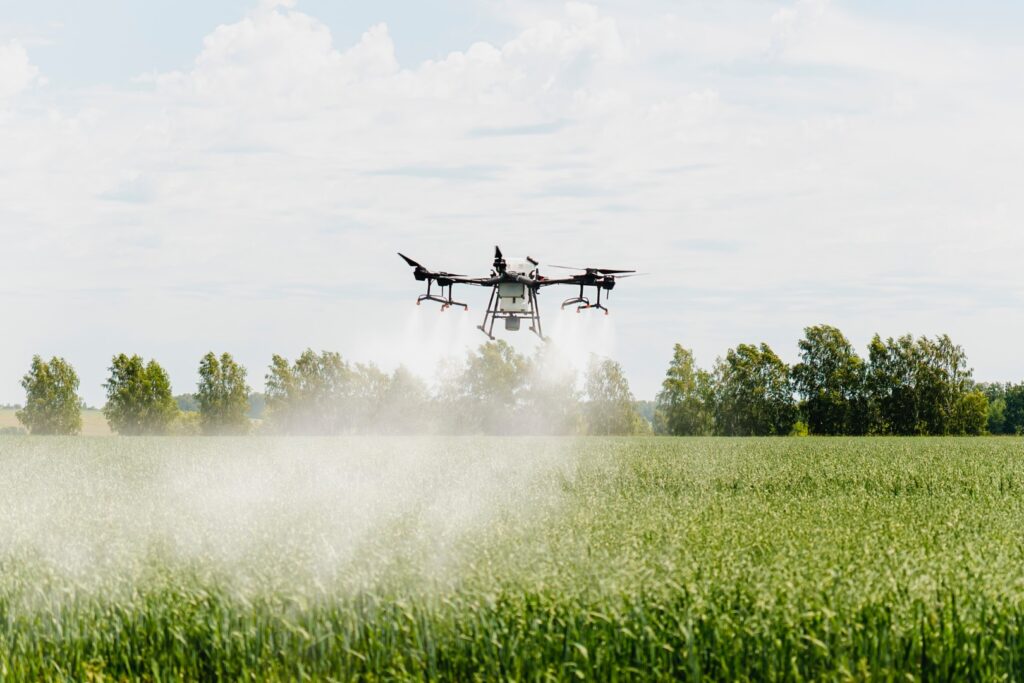
Another critical point is phytosanitary management. Pests such as caterpillars and foliar diseases compromise the plant's photosynthetic capacity, reducing the energy available for ear formation.
And here comes an important detail: the plant does not prioritize production if it is under stress. She prioritizes survival.
In other words, any imbalance causes it to naturally reduce its potential.
During bolting and pollination, care needs to be even greater. This is an extremely sensitive phase. High temperatures, low humidity and pollination failures directly impact grain filling.
The famous poorly formed ear is often not a mistake at the end of the cycle. It is a reflection of decisions or failures back then.
In safrinha corn, where the environment is already more challenging, understanding this phase is essential.
Those who protect the development of the cob well are not just taking care of the plant. It's protecting the outcome.