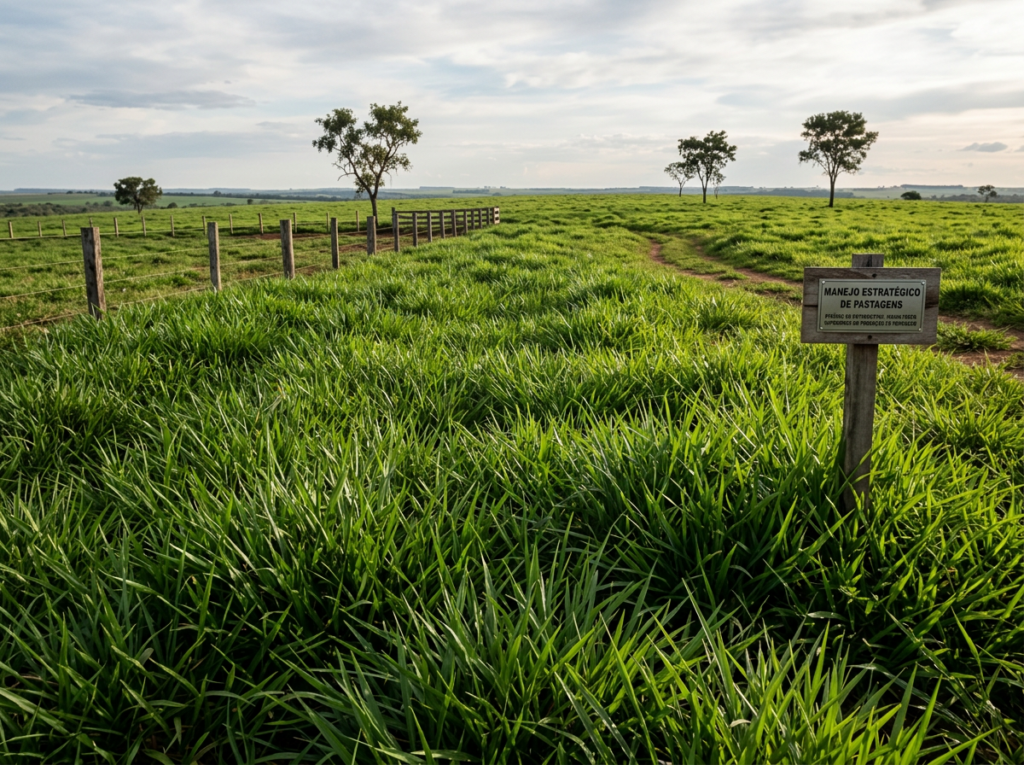
Brazilian livestock farming occupies a prominent position on the world stage, with Brazil being one of the largest producers and exporters of beef on the planet. Much of this production is based on extensive systems, in which pastures represent the main source of food for livestock. However, maintaining the quality and productivity of pastures faces significant challenges, especially during the off-season, when reduced rainfall and falling temperatures directly impact forage development.
Proper pasture management is a determining factor in the success of livestock farming, directly influencing production rates, animal health and the profitability of rural properties. It is estimated that more than 60% of Brazilian pastures present some degree of degradation, compromising the areas' support capacity and increasing production costs.
Given this scenario, it is essential to adopt management practices that ensure the recovery and maintenance of pasture productivity throughout the year. Adequate soil nutrition, control of invasive plants, correct management of animal stocking and the use of modern agricultural technologies are fundamental pillars for the sustainability of national livestock farming.
The majority of Brazilian pastures are composed of tropical grasses of the genera Brachiaria and Panicum, which are well adapted to the country's soil and climate conditions. However, even these species require adequate management to express their full productive potential. Pasture degradation is a growing problem, caused by factors such as overgrazing, lack of maintenance fertilizer, soil compaction and weed infestation.
During the dry period, forage production drops drastically, reaching only 20% of the production observed in summer. This reduction compromises the animals' weight gain and requires specific strategies, such as deferral of pastures, food supplementation and the use of forages with greater tolerance to water deficit.
Pasture fertilization is another crucial aspect, with nitrogen, phosphorus and potassium being the nutrients most demanded by forage grasses. Periodic soil analysis allows the specific nutritional needs of each area to be identified, enabling precise and economical interventions. Furthermore, correcting soil acidity through liming is essential to ensure the availability of nutrients to plants.
Weed control in pastures represents a constant challenge for producers. Invasive species compete for water, light and nutrients, significantly reducing forage productivity. Some toxic plants still pose a direct risk to animal health, potentially causing serious poisoning and even deaths in livestock.
Route Chemicals offers complete and technologically advanced solutions for efficient pasture management. With a diverse line of selective herbicides and high-performance adjuvants, the company meets the demands of livestock farmers seeking productivity and sustainability. Route Chemicals products are developed with cutting-edge technology, ensuring effective control of the main weeds that infest Brazilian pastures, without compromising the development of forage grasses.
In addition, the company provides foliar fertilizers and soil conditioners that enhance the absorption of nutrients by plants, promoting the recovery of degraded areas and increasing the support capacity of pastures. Route Chemicals' specialized technical support helps producers choose the most suitable products for each situation, considering the particularities of each rural property.
Proper pasture management is fundamental to the sustainability of Brazilian livestock farming, directly impacting production rates and the profitability of the activity. The adoption of integrated management practices, combined with the use of modern technologies, allows the recovery of degraded areas and the maintenance of productivity throughout the year. Route Chemicals consolidates itself as a strategic partner for livestock farmers, offering innovative and efficient solutions for the sector.
References
EMBRAPA. Tropical pasture management. Brasília: Embrapa, 2022.
DIAS-FILHO, M. B. Pasture degradation: processes, causes and recovery strategies. 4th ed. Belém: Embrapa Amazônia Oriental, 2021.
MARTHA JÚNIOR, G. B.; VILELA, L. Pastures in the Cerrado: low productivity due to limited use of fertilizers. Planaltina: Embrapa Cerrados, 2020.